
 PV
 TG
 MN
 EM
 EI
 ND
 NM
 SR

 CT Scan
 PET CT
 Digital X-ray
 Ultrasound
 Amniocentesis

 Fetal Reduction
 Thermalytix Breast Screening
 Cardiology
 Lab Tests
 GAMCA Pre-Medical
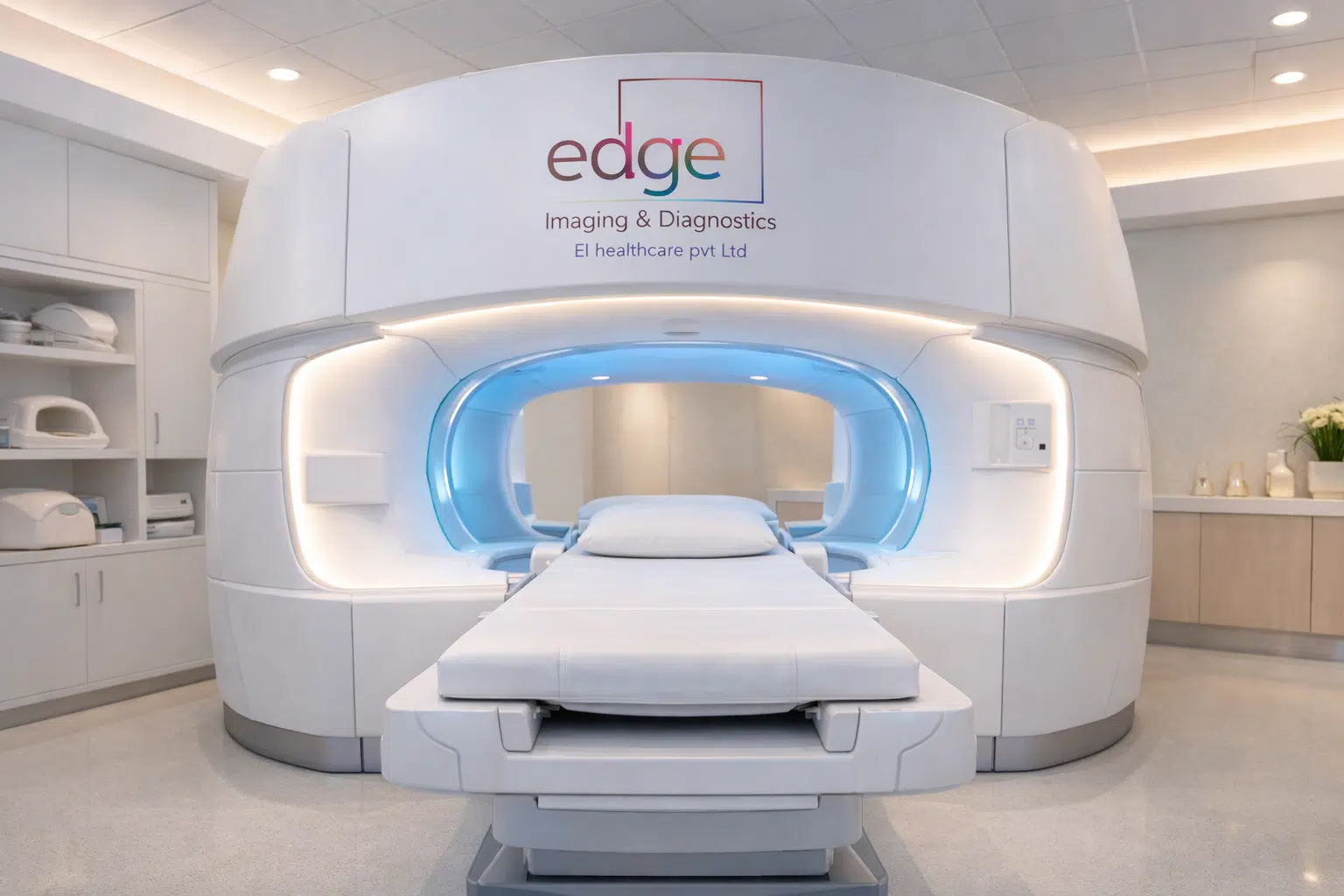
AI breast cancer screening uses computer software, trained on very large numbers of breast images, to spot patterns that may need a closer look. Today AI is used in three main ways: as an extra reader for mammograms, to analyse heat (thermal) images in tests such as Thermalytix, and as a helper during breast ultrasound. In a well-run service, a radiologist still reviews and signs the final report.
You have probably seen headlines saying that “AI can find breast cancer”. Some of these headlines are exciting, and some are simply advertising. As a woman deciding whether to get checked, or as a son or daughter helping a mother decide, you need a calm, clear picture: what AI actually does, how good the evidence is, and where it fits next to the tests doctors already trust.
This guide is written for women and families in Delhi and across India. It explains AI in plain words, shows what the big studies found, and is open about what AI cannot do. It also explains how Thermalytix, the AI-assisted thermal breast screening we offer at all three Edge Imaging & Diagnostics centres in West Delhi, fits alongside mammography and breast ultrasound. A short Hinglish section is included near the end.
One thing to keep in mind as you read: AI is a tool that helps doctors. It does not replace a clinical breast examination, it does not replace a mammogram when your doctor advises one, and it never replaces seeing a doctor when you notice a change in your breast.
AI breast cancer screening at a glance
- What AI does: looks for patterns in breast images and flags areas that may need a closer look. It does not diagnose cancer on its own.
- Strongest evidence so far: AI helping radiologists read screening mammograms, in large studies from Sweden (MASAI) and Germany (PRAIM)
- AI with thermal imaging: Thermalytix by Niramai — no touch, no pain, no radiation, about 15–20 minutes
- At Edge Imaging: Thermalytix at all three West Delhi centres, ₹999 (180 report) or ₹1,699 (360 report); breast ultrasound is also available
- Who signs the report: a radiologist reviews and certifies it
- Not a replacement for: a mammogram when your doctor advises one, usually from around age 40 or earlier if you are at higher risk
- Have a lump or other symptom? Do not book a screening test. See a doctor for an examination and diagnostic imaging.
What this guide covers
- What AI breast cancer screening means
- Why AI is entering breast screening now
- How a breast-screening AI learns, in plain words
- AI reading mammograms
- What the big studies found: MASAI and PRAIM
- AI in thermal imaging: how Thermalytix works
- What the thermal AI studies report
- AI-assisted breast ultrasound
- The three AI-assisted approaches compared
- What AI can and cannot do
- Who reads and signs the report
- Why this matters in India
- Where Thermalytix fits next to mammography and ultrasound
- If the AI flags something: the next steps
- Your data and AI: privacy basics
- How to choose an AI breast screening service
- How this guide differs from our Thermalytix booking page
- AI and breast screening words, explained simply
- Myths and facts about AI in breast screening
- Seedhi baat: AI breast screening Hinglish mein
- Book an AI-assisted breast screening in West Delhi
- References
- Frequently asked questions
- The bottom line
What AI breast cancer screening means
Screening means checking women who feel well and have no breast symptoms, so that a problem can be found early, before it causes a lump or other change. Artificial intelligence (AI) here means computer software that has been trained to recognise patterns in medical images.
Put the two together and “AI breast cancer screening” simply means a screening test where software helps to look at the images. The test itself can be a mammogram (a low-dose X-ray of the breast), a thermal image (a picture of the heat coming from the skin), or a breast ultrasound (a sound-wave scan). The AI does not take the picture. It reads the picture, gives a score or marks an area, and passes that information to a human expert.
So when someone says “AI-based breast cancer screening in India”, the first useful question is: AI reading which kind of image? The answer changes how much evidence there is, what the test can find, and what you should do next.
Why AI is entering breast screening now
Three things have come together in the last few years.
- Better software. Modern AI methods, often called deep learning, became much better at recognising patterns in pictures. The same family of methods that helps phones recognise faces can be trained on medical images.
- Too many images, too few specialists. In many countries, each screening mammogram is read by two radiologists. That is a lot of expert time. AI is being tested as a way to share some of this work, so that experts can spend more time on the images that matter most.
- The need to reach more women. In a large country like India, many women never get any breast check at all. Tools that are quick, portable and acceptable to women could help more of them get screened.
None of this means AI has “solved” breast cancer screening. It means AI has become good enough to be tested properly, in real screening programmes, with real women. That is why the studies below matter so much.
How a breast-screening AI learns, in plain words
Think of how a junior doctor learns to read breast images. She looks at thousands of examples, along with the final answer for each one — which turned out to be cancer and which did not. Over time she learns which patterns are worrying.
A breast-screening AI is trained in a similar way, but with far more examples and no tiredness:
- Collect images. Developers gather large sets of breast images with known outcomes.
- Train the model. The software adjusts itself again and again until it gets better at telling the groups apart.
- Test it on new images. The model is checked on images it has never seen, to measure how often it is right.
- Get approval and use it. If results are good, the company seeks approval from regulators, and the tool is used under a doctor’s supervision.
- Keep checking. A careful service keeps auditing results, because machines, populations and practices change over time.
This also shows the weak point of any AI: it is only as good as what it learned from. A tool trained mostly on images from one country, one age group or one type of machine may not perform the same way elsewhere. That is why experts keep asking for AI tools to be tested on Indian women before they are relied upon widely here.
AI reading mammograms
Computers have helped read mammograms for more than two decades. Older systems, called computer-aided detection (CAD), drew marks on the image wherever they saw something unusual. They often marked too many harmless areas, and many radiologists found them more distracting than helpful.
Modern AI is different. It gives each mammogram a risk score, and in some programmes it is used in one of these ways:
- Triage: mammograms the AI rates as very low risk are read by one radiologist instead of two, while high-risk ones get extra attention.
- Second reader: the AI acts like an additional reader alongside the radiologist.
- Safety net: the AI highlights areas the radiologist may want to look at again before signing off.
In all of these models, a radiologist makes the final decision about whether a woman needs to come back for more tests. Please note that Edge Imaging & Diagnostics does not offer mammography. If your doctor advises a mammogram, they will guide you on where to have it.
What the big studies found: MASAI and PRAIM
The strongest evidence for AI in breast screening comes from mammography. Two large European studies are worth knowing about.
MASAI (Sweden). This was a randomised trial, the most reliable kind of study. Women attending routine screening were divided into two groups. In one group, AI helped the radiologists: it sorted mammograms by risk and highlighted suspicious areas. In the other group, the usual double reading by two radiologists continued without AI. The first safety results, published in The Lancet Oncology in 2023 and covering about 80,000 women, reported that the AI-supported group found about 20% more cancers, without more false alarms, while the radiologists’ reading workload fell by about 44%. The final results, published in The Lancet in 2026 and covering about 106,000 women, looked at interval cancers — cancers that show up between two screening rounds, which are the ones screening has missed. There were 82 interval cancers in the AI group compared with 93 in the standard group, about 12% fewer. The researchers concluded that AI-supported screening was not worse than standard screening on this measure.
PRAIM (Germany). This was a large real-world study, not a randomised trial, involving more than 460,000 women screened at 12 sites in Germany. Radiologists could choose whether to use an AI tool. Where AI was used, the cancer detection rate was about 17.6% higher, and the rate of women called back for more tests did not go up.
| Study | Where and how | Main findings | What to keep in mind |
|---|---|---|---|
| MASAI, Lancet Oncology 2023 | Sweden; randomised; about 80,000 women | About 20% more cancers found; about 44% less reading work; false positives did not rise | Early safety analysis; one AI product; one country’s programme |
| MASAI, The Lancet 2026 | Same trial; about 106,000 women | 82 vs 93 interval cancers (about 12% fewer); AI not worse than standard | Small numbers of interval cancers; follow-up continues |
| PRAIM, Nature Medicine 2025 | Germany; real-world; 460,000+ women | About 17.6% higher detection; recall rate not higher | Not randomised; radiologists chose when to use AI |
These are encouraging results. But notice three things. First, all of them are about mammograms, not thermal imaging or ultrasound. Second, in every study, AI supported radiologists rather than working alone. Third, they were done in European screening programmes, mostly in women aged 40 and above. They do not automatically tell us how the same tools would perform for younger Indian women.
AI in thermal imaging: how Thermalytix works
Thermal imaging takes a different approach. Instead of X-rays, it uses a special camera that reads the heat naturally coming from the skin. Changes in breast tissue can alter blood flow and skin temperature. On their own, thermal pictures are hard for the human eye to interpret, and older forms of thermography were often unreliable.
Thermalytix, developed by the Indian company Niramai Health Analytix, adds AI to thermal imaging. In simple terms:
- A trained technician explains the test and notes your history.
- A cool-air unit settles the skin temperature of your chest for a few minutes, in private, so the images are reliable.
- The camera captures thermal images from a few angles, from a distance. Nothing touches or presses the breast.
- The AI analyses the heat patterns and prepares a breast health report with a B-Score from 0 to 5, plus separate scores for hotspots, the area around the nipple (areolar), blood-vessel patterns (vascular) and a combined (ensemble) score.
- A radiologist reviews and certifies the report before it is shared with you.
Because the test uses no radiation and needs no touching or compression, it is acceptable to many women who would otherwise avoid any breast check. Niramai states that Thermalytix is approved by CDSCO in India (Class C) and is CE-marked for Europe, Africa and Asia. You can read the full details of the test, the two report options and how to prepare on our Thermalytix breast screening page.
What the thermal AI studies report
Here we need to be careful, because evidence for thermal AI is at a different stage from evidence for AI mammography.
What Niramai reports. According to Niramai Health Analytix, more than 6,50,000 women have been screened with Thermalytix in more than 22 countries, the company has more than 54 publications, and its clinical studies report sensitivity above 95% and specificity above 90%. These figures are reported by Niramai about its own technology. They are not Edge Imaging’s own results.
A published example. One study, published in JCO Global Oncology in 2020 by researchers from Niramai, included 470 women at two centres in Bengaluru. As reported by the authors, Thermalytix had an overall sensitivity of about 91% and specificity of about 82%. The authors called their results preliminary. Several authors were employed by Niramai, and the study was much smaller than the mammography trials described above.
What regulators elsewhere say. In 2019, the US Food and Drug Administration (FDA) warned that thermography should not replace mammography, and said mammography is the only screening method proven to reduce deaths from breast cancer. That warning was about thermography in general, not specifically about Thermalytix, but it is a fair reminder of where thermal imaging stands.
What this means for you. Thermal AI is a promising, comfortable, radiation-free screening option, especially for women who would otherwise not get checked at all. But it does not yet have the large randomised-trial evidence that AI mammography has. That is exactly why we describe Thermalytix as a screening test for women without symptoms, used alongside mammography, not instead of it.
AI-assisted breast ultrasound
Breast ultrasound uses sound waves to make pictures of breast tissue. It uses no radiation and is very good at telling a fluid-filled cyst from a solid lump. It is often the first imaging test for women under 40, for women with dense breasts, and for pregnant or breastfeeding women. You can read more in our breast ultrasound (sonomammography) guide.
AI is being developed for breast ultrasound in two main ways:
- Decision support: once a lump is seen, software looks at its shape, edges and inner pattern and suggests how likely it is to be harmless or suspicious. Some such tools have received regulatory clearance in some countries.
- Automated whole-breast ultrasound: a machine sweeps the whole breast in a standard way, and software helps the radiologist review the many images it produces.
Ultrasound depends a lot on the skill of the person holding the probe, so AI is seen as a way to make results more consistent. Research is active, but these tools are still decision aids. At Edge Imaging, breast ultrasound is performed and reported by a radiologist, and we offer it as part of our wider ultrasound services.
The three AI-assisted approaches compared
| AI-supported mammography | Thermalytix (AI + thermal imaging) | Breast ultrasound (AI tools emerging) | |
|---|---|---|---|
| What the image shows | Breast structure on low-dose X-ray | Heat pattern from the skin surface | Breast tissue using sound waves |
| Radiation | Low dose | None | None |
| Touch or compression | Breast is pressed between two plates for each picture | No touch, no compression | A smooth probe with gel moves over the skin |
| Strength of AI evidence | Large randomised and real-world studies | Company-led studies; independent large trials still limited | Early; mostly decision-support research |
| Main role | Standard screening test, usually from around 40 | Comfortable, radiation-free screening for women without symptoms | Checking a lump or symptom; extra test for dense breasts; follow-up after a flagged screen |
| At Edge Imaging? | Not offered; your doctor may advise a mammogram | Yes, at all three centres | Breast ultrasound yes, performed and reported by a radiologist |
What AI can and cannot do
What AI can do well
- Look at every image with the same attention, without getting tired at the end of a long day
- Highlight areas that a busy human reader might want to look at again
- Help sort large numbers of images so that experts focus on the ones that need them most
- Give a consistent score that can be compared over time
- In the case of thermal AI, make a no-touch, radiation-free test practical to interpret
What AI cannot do
- It cannot diagnose cancer. Only a sample of cells or tissue, examined under a microscope, can confirm cancer.
- It cannot examine you. It does not know about a lump you feel, a nipple that has recently turned inwards, or your family history unless someone records it.
- It cannot be perfect. Every screening test, with or without AI, misses some cancers (false negatives) and raises some false alarms (false positives).
- It cannot fix a poor image. If the test is done badly, the AI’s answer will be less reliable.
- It cannot replace your doctor’s judgement about which tests you need and when.
A useful way to think about AI: it is a very attentive assistant, not the doctor in charge.
Who reads and signs the report
This is one of the most important questions to ask about any AI breast test. In a responsible service, the AI’s output is never sent to you on its own. A qualified doctor — usually a radiologist, a doctor specialised in reading medical images — reviews the images and the AI’s result, and then signs or certifies the report.
For Thermalytix at Edge Imaging, the AI analyses the thermal images and prepares the report, which is then reviewed and certified by a radiologist before it is shared with you. Our articles are medically reviewed by Dr. Nishant Thapar, and you can learn about the wider team on our meet the experts page.
After that, the next step is with your own doctor. Take the report to your gynaecologist, breast surgeon or family physician, who will put it together with your history and an examination.
Why this matters in India
Breast cancer is now the most common cancer among women in India. GLOBOCAN 2022 estimates, quoted in a Government of India health technology policy brief, put the number of new cases at about 1.9 lakh a year and deaths at about 97,000 a year. That same brief notes that most patients in India present at an advanced stage. Three features of the Indian situation shape how AI might help.
- Late diagnosis. When breast cancer is found late, treatment is harder and outcomes are worse. Any acceptable test that brings more women in for a check earlier is valuable — as long as positive results are followed up properly.
- Younger women. Breast cancer also affects younger women, including some below 40. Most screening programmes abroad, and most of the AI mammography evidence, focus on women aged 40 or 50 and above. Women below 40 often have no routine screening plan at all.
- Dense breasts. Younger women, and many women in general, have dense breast tissue. Dense tissue looks white on a mammogram, and so do many cancers, which makes cancers harder to see. Ultrasound is often used as an extra test in dense breasts.
India’s own national operational framework for common cancers (Ministry of Health and Family Welfare, 2016) recommends a clinical breast examination for women aged 30 to 65 once every five years, with breast ultrasound and, where available, mammography for women whose examination finds a problem. AI tools may help add to this, but the basic steps — breast awareness, examination by a trained person, and proper imaging when something is found — remain the foundation.
Where Thermalytix fits next to mammography and ultrasound
Here is a simple way to think about where each test fits. This is general guidance only; your doctor will advise what is right for you, especially if you have a strong family history or a known gene change.
| Your situation | Commonly suggested | Where Thermalytix can fit |
|---|---|---|
| 18–39, no symptoms, average risk | Breast awareness; clinical breast exam during routine visits | A radiation-free first check, if you want one |
| Family history of breast cancer, any age | Talk to your doctor about a personal screening plan, which may start earlier | Can be added; does not replace the tests your doctor advises |
| Around 40 and above, no symptoms | Mammogram when your doctor advises it; ultrasound may be added for dense breasts | Can be used alongside, never instead of a mammogram |
| Pregnant or breastfeeding | Discuss any breast concern with your doctor; ultrasound is usually used for a lump | A B-Score of 0 may be seen; discuss the report with your doctor |
| Lump, discharge, skin or nipple change, new pain that does not settle | Doctor’s examination and diagnostic imaging, usually starting with breast ultrasound | Not the right test — please see a doctor first |
Niramai especially recommends the test for women with a family history or other concern, and Edge offers it for women aged 18 to 80. For women who keep postponing any breast check because of fear of pain, touch or radiation, a no-touch screen can be an easier first step. If you have found a lump, our guide on which test you need for a lump or swelling explains the usual order of tests.
If the AI flags something: the next steps
Most women who have a Thermalytix screening are told that no further test is needed now. If your report recommends a follow-up, please remember: a flag is not a diagnosis. It means a closer look is advised.
- Show the report to your doctor. They will usually examine your breasts and ask about your history.
- Diagnostic imaging. A breast ultrasound is often the next test, and it is available at Edge Imaging. Your doctor may also advise a mammogram.
- A sample, only if needed. If imaging shows something that needs confirming, your doctor may advise a breast FNAC or an ultrasound-guided breast biopsy, usually a core needle biopsy. At Edge, image-guided FNAC and biopsy are done at our Raghubir Nagar centre on your doctor’s referral.
- Treatment planning, if needed, with your surgeon or oncologist.
Many flagged results turn out to be harmless, such as cysts, fibroadenomas or normal hormonal changes. If you would like to understand the difference between the two kinds of needle test, our page on FNAC versus core needle biopsy explains it simply, and our guide on ultrasound-guided FNAC explains why image guidance helps. If the flag concerns the underarm, your doctor may discuss a lymph node biopsy, though that is needed only in some cases.
If a scheduled repeat screening is advised (for example, a B-Score of 3 near your period date, where a repeat test in the middle of your cycle may be suggested), put the date in your calendar. Follow-up only works if it actually happens.
Your data and AI: privacy basics
Breast images are among the most private health information a woman has. Any AI test involves software processing those images, and sometimes sending them to a secure server for analysis. You have every right to ask how your data is handled.
Some basics to know:
- Indian law. The Digital Personal Data Protection Act, 2023 and its Rules, notified in November 2025, give individuals rights such as clear consent notices for a stated purpose, and the ability to ask for access, correction and erasure of their personal data, with a phased timeline for organisations to comply.
- Security standards. Niramai states that Thermalytix is certified to ISO 27001, an international standard for information security, as well as ISO 13485 for medical devices.
- Thermal images are not photographs. A thermal image shows heat patterns, not a normal photograph, though it is still personal data and should be treated with care.
- Your own copy. Keep your report safe, and share it only with the doctors involved in your care.
You can read how we handle personal information in our privacy policy. If you have a specific question about where your images are processed or stored, please ask us when you book.
How to choose an AI breast screening service
Whether you book with us or anywhere else, these questions will help you judge any “AI breast screening” offer:
- Which kind of image does the AI read? Mammogram, thermal image or ultrasound? Each has different evidence.
- Is the device approved in India? Ask about CDSCO approval for the device and software.
- Who signs the report? A radiologist or qualified doctor should review and sign it.
- Who is the test meant for? A responsible service will tell you clearly that screening is for women without symptoms.
- Does the service say what the test cannot do? Be cautious of any claim that a test never misses a cancer or replaces mammography.
- What happens after a flagged result? Is breast ultrasound available? Can FNAC or biopsy be arranged if needed?
- Is the centre accredited? Edge Imaging & Diagnostics is NABH accredited; you can read more about us.
- Is the price clear? At Edge, Thermalytix is ₹999 with the 180 report and ₹1,699 with the 360 report, and the screening is the same in both.
- How is your data handled? Ask about consent and storage.
- Is the test done in privacy and with respect? For Thermalytix at Edge, a trained female technician guides you and images are captured in a private screening area.
How this guide differs from our Thermalytix booking page
We have a separate page for Thermalytix breast screening in West Delhi. That page is for booking: it covers the price of each report option, what the 180 and 360 reports contain, how to read your B-Score, preparation, and the centre addresses.
This guide is different. It is about artificial intelligence in breast screening as a whole: how AI is used with mammograms, thermal images and ultrasound, what the large studies such as MASAI and PRAIM actually found, what AI can and cannot do, who should sign the report, privacy, and how to judge any AI breast screening service. If you have already decided you want Thermalytix, the booking page is the one to read. If you are still trying to understand whether AI screening makes sense for you, you are in the right place.
AI and breast screening words, explained simply
| Word | Simple meaning |
|---|---|
| Artificial intelligence (AI) | Computer software trained to recognise patterns, here in breast images |
| Algorithm | The set of steps the software follows to reach its answer |
| Deep learning | A modern type of AI that learns patterns from very large numbers of examples |
| Training data | The images an AI learned from; it affects how well the AI works for different women |
| Validation | Testing the AI on new images it has never seen, ideally from the population it will be used in |
| Sensitivity | Out of women who do have cancer, how many the test correctly flags |
| Specificity | Out of women who do not have cancer, how many the test correctly calls normal |
| False positive | The test flags a problem, but further tests show nothing serious |
| False negative | The test looks normal, but a cancer is present |
| Interval cancer | A cancer found between two screening rounds, often one that screening missed |
| Recall | Being called back for more tests after a screening |
| Double reading | Two radiologists independently read each screening mammogram |
| CAD | Computer-aided detection, an older type of software that marked areas on mammograms |
| Thermal imaging | Pictures of the heat coming from the skin, taken with a special camera |
| B-Score | The 0–5 score on a Thermalytix report; higher numbers mean more concern |
| BI-RADS | A standard scoring system used in mammography and breast ultrasound reports |
| Dense breasts | Breasts with more gland and fibrous tissue than fat; can hide cancers on mammograms |
| CDSCO | India’s national regulator for drugs and medical devices |
Myths and facts about AI in breast screening
| Myth | Fact |
|---|---|
| “AI can diagnose breast cancer by itself.” | AI flags patterns. Only a biopsy or FNAC examined under a microscope confirms cancer, and a radiologist signs the imaging report. |
| “AI never misses anything.” | Every screening test, with or without AI, misses some cancers and raises some false alarms. |
| “If I have an AI test, I never need a mammogram.” | If your doctor advises a mammogram, please have it. AI thermal screening is used alongside mammography, not instead of it. |
| “AI is replacing radiologists.” | In the large studies, AI supported radiologists. Humans still made the final decisions. |
| “A normal AI screen means my lump is fine.” | A lump needs a doctor’s examination and diagnostic imaging, whatever any screening test says. |
| “An AI trained abroad works the same for everyone.” | Results can differ by age, breast density and population, which is why local testing matters. |
| “A full body MRI already checks the breasts.” | A general full body MRI is not a breast screening test. Breast MRI is a separate, dedicated scan used for specific situations. |
Seedhi baat: AI breast screening Hinglish mein
AI breast screening kya hai? Ismein computer software breast ki images ko dekhta hai aur jo jagah thodi alag lagti hai, use mark karta hai. Software khud cancer ka diagnosis nahi karta. Final report radiologist check karke sign karte hain.
Edge Imaging me kaunsa AI test hai? Thermalytix by Niramai. Ismein ek thermal camera skin ki garmi ki picture leta hai aur AI uska analysis karta hai. Koi chhoota nahi, koi dard nahi, koi radiation nahi. Lagbhag 15–20 minute lagte hain. Price ₹999 (180 report) ya ₹1,699 (360 report).
Kya isse mammogram ki zaroorat khatam ho jaati hai? Nahi. Agar doctor ne mammogram bola hai, toh woh zaroor karwaiye. Thermalytix uske saath use hota hai, uski jagah nahi.
Agar report me kuch flag aaye toh? Ghabraiye mat. Iska matlab cancer nahi hai, bas closer look chahiye. Doctor ko report dikhaiye. Aksar agla test breast ultrasound hota hai, jo Edge par available hai.
Gaanth ya koi symptom hai? Toh screening nahi, seedha doctor ko dikhaiye aur diagnostic imaging karwaiye.
Book an AI-assisted breast screening in West Delhi
At Edge Imaging & Diagnostics, Thermalytix AI-assisted thermal breast screening is available at all three of our West Delhi centres: Paschim Vihar (Bhera Enclave, opposite Radisson Blu Hotel), Raghubir Nagar (Tagore Garden Extension) and Moti Nagar (next to Acharya Shree Bhikshu Hospital). The screening takes about 15–20 minutes, a trained female technician guides you, and the report is reviewed and certified by a radiologist. It costs ₹999 with the 180 report or ₹1,699 with the 360 report, which adds a page of annotated thermal images.
When you message us, tell us the date of your last period, and whether you are pregnant, breastfeeding, on hormone therapy, have had breast surgery or have any breast symptoms. We will share preparation instructions and confirm your slot. If you have a symptom, we will guide you towards the right diagnostic test instead.
💬 WhatsApp to book your AI-assisted breast screening | Call 9555999960
You can also call 96677 41121, 95998 62737 or 93199 88570, or our Paschim Vihar reception on 011-49988416. Our contact page has directions to each centre.
References
- Artificial intelligence-supported screen reading versus standard double reading in the MASAI trial — Lång K, et al. The Lancet Oncology, 2023.
- Interval cancer, sensitivity and specificity with AI-supported mammography screening in the MASAI study — The Lancet, 2026.
- Nationwide real-world implementation of AI for cancer detection in population-based mammography screening (PRAIM) — Eisemann N, et al. Nature Medicine, 2025.
- Thermalytix study in symptomatic and asymptomatic women — Kakileti ST, et al. JCO Global Oncology, 2020.
- FDA statement on thermography and mammography — US Food and Drug Administration, 2019.
- Operational Framework: Management of Common Cancers — Ministry of Health and Family Welfare, Government of India, 2016.
Frequently asked questions
What is AI breast cancer screening?
It is breast screening in which computer software, trained on many breast images, helps look at the pictures and flags areas that may need a closer look. The images may come from a mammogram, a thermal camera or an ultrasound. A radiologist reviews and signs the final report.
Is AI-based breast cancer screening available in India?
Yes. One example is Thermalytix by Niramai, an AI-assisted thermal screening that Niramai states is approved by CDSCO in India. At Edge Imaging & Diagnostics it is available at all three West Delhi centres.
Can AI detect breast cancer on its own?
No. AI can flag patterns that may need attention, but it cannot confirm cancer. A doctor reviews the result, and only a sample of cells or tissue examined under a microscope can confirm a diagnosis.
How accurate is AI in breast cancer screening?
It depends on the type of image and the tool. Large European studies found that AI support helped radiologists find more cancers on mammograms without more false alarms. For thermal AI, Niramai reports high sensitivity and specificity in its own studies, but large independent trials are still limited. No test is perfect.
What did the MASAI trial show?
MASAI was a randomised trial in Sweden. AI-supported mammogram reading found about 20% more cancers and cut radiologists’ reading work by about 44%, without more false positives. Final results in 2026 reported about 12% fewer interval cancers, and AI-supported screening was found to be not worse than standard double reading.
How does Thermalytix use AI?
A thermal camera captures the heat pattern of the chest from a few angles, without touching you. The AI analyses these patterns and prepares a report with a B-Score from 0 to 5, which a radiologist then reviews and certifies.
Does a radiologist check an AI breast screening report?
In a responsible service, yes. At Edge Imaging, every Thermalytix report is reviewed and certified by a radiologist before it is shared with you.
Is AI breast screening a replacement for a mammogram?
No. If your doctor advises a mammogram, usually from around age 40 or earlier if you are at higher risk, please have it. AI thermal screening is used alongside mammography, not instead of it.
Who should consider AI-based thermal breast screening?
Women without breast symptoms who want a radiation-free, no-touch check, including women aged 18 to 40 who are not yet due for a mammogram and women with a family history of breast cancer. Edge offers it for women aged 18 to 80.
Is AI breast screening useful for women with dense breasts?
Dense breasts make cancers harder to see on mammograms. Breast ultrasound is often used as an extra test in dense breasts, and thermal screening is another radiation-free option some women choose. Ask your doctor which combination suits you.
What happens if the AI flags something?
A flag is not a diagnosis. Show the report to your doctor, who will usually examine you. A breast ultrasound is often the next test, and your doctor may also advise a mammogram. FNAC or biopsy is needed only if imaging finds something that must be confirmed.
Is my data safe when AI is used?
You have the right to ask how your images are processed and stored. India’s Digital Personal Data Protection Act, 2023 gives individuals rights over their personal data, and Niramai states that Thermalytix is certified to the ISO 27001 information security standard.
Does Edge Imaging use AI to read mammograms?
No. Edge Imaging does not offer mammography. At Edge, AI is used in Thermalytix thermal breast screening, and breast ultrasound is performed and reported by a radiologist.
How much does AI breast screening cost at Edge Imaging?
Thermalytix costs ₹999 with the 180 report and ₹1,699 with the 360 report. The screening is the same; the 360 report adds a page of annotated thermal images.
AI breast screening kya hota hai?
Ismein computer software breast ki images dekh kar jo jagah alag lagti hai use mark karta hai. Software diagnosis nahi karta; report radiologist check karke sign karte hain.
Kya AI test ke baad mammogram ki zaroorat nahi padti?
Padti hai, agar doctor ne bola hai. Thermalytix mammogram ke saath use hota hai, uski jagah nahi.
How do I book AI-assisted breast screening in West Delhi?
Call or WhatsApp 9555999960. Tell us the date of your last period and any relevant history, and we will share preparation instructions and confirm your slot at Paschim Vihar, Raghubir Nagar or Moti Nagar.
The bottom line
AI is changing breast screening, and the evidence from large mammography studies is encouraging: with AI support, radiologists found more cancers and spent less time on low-risk images. AI-assisted thermal screening such as Thermalytix brings a different benefit — a comfortable, no-touch, radiation-free test that many women are willing to take, especially those not yet due for a mammogram.
But AI is an assistant, not the doctor in charge. It cannot examine you, it cannot diagnose cancer, and it does not replace a mammogram when your doctor advises one. The safest path combines breast awareness, a clinical breast examination, the right imaging for your age and risk, a radiologist-signed report, and prompt follow-up if anything is flagged.
If you would like to start with a radiation-free, AI-assisted check, call or WhatsApp 9555999960 to book Thermalytix at any of our three West Delhi centres. And if you have noticed any change in your breast, skip the screening and see a doctor this week.
Written by the team at Edge Imaging & Diagnostics, West Delhi. Medically reviewed by Dr. Nishant Thapar. Last reviewed: October 2026.
Disclaimer: this article is general information and does not replace advice from your own doctor. Thermalytix is a screening test for women without symptoms and does not diagnose breast cancer. Figures about Thermalytix are as reported by Niramai Health Analytix and are not Edge Imaging’s own results. Thermalytix® is a technology of Niramai Health Analytix Pvt. Ltd. Please confirm price and slot availability when you book.