
FNAC vs Core Needle Biopsy — When your doctor discovers a lump or suspicious mass, the next step is usually a tissue test to find out what it is. Two of the most commonly recommended tests are FNAC (Fine Needle Aspiration Cytology) and Core Needle Biopsy. Both use needles, but they work differently and provide different types of information. This comprehensive guide explains everything you need to know to understand your doctor’s recommendation.
Table of Contents
What Is FNAC? for FNAC vs Core Needle Biopsy
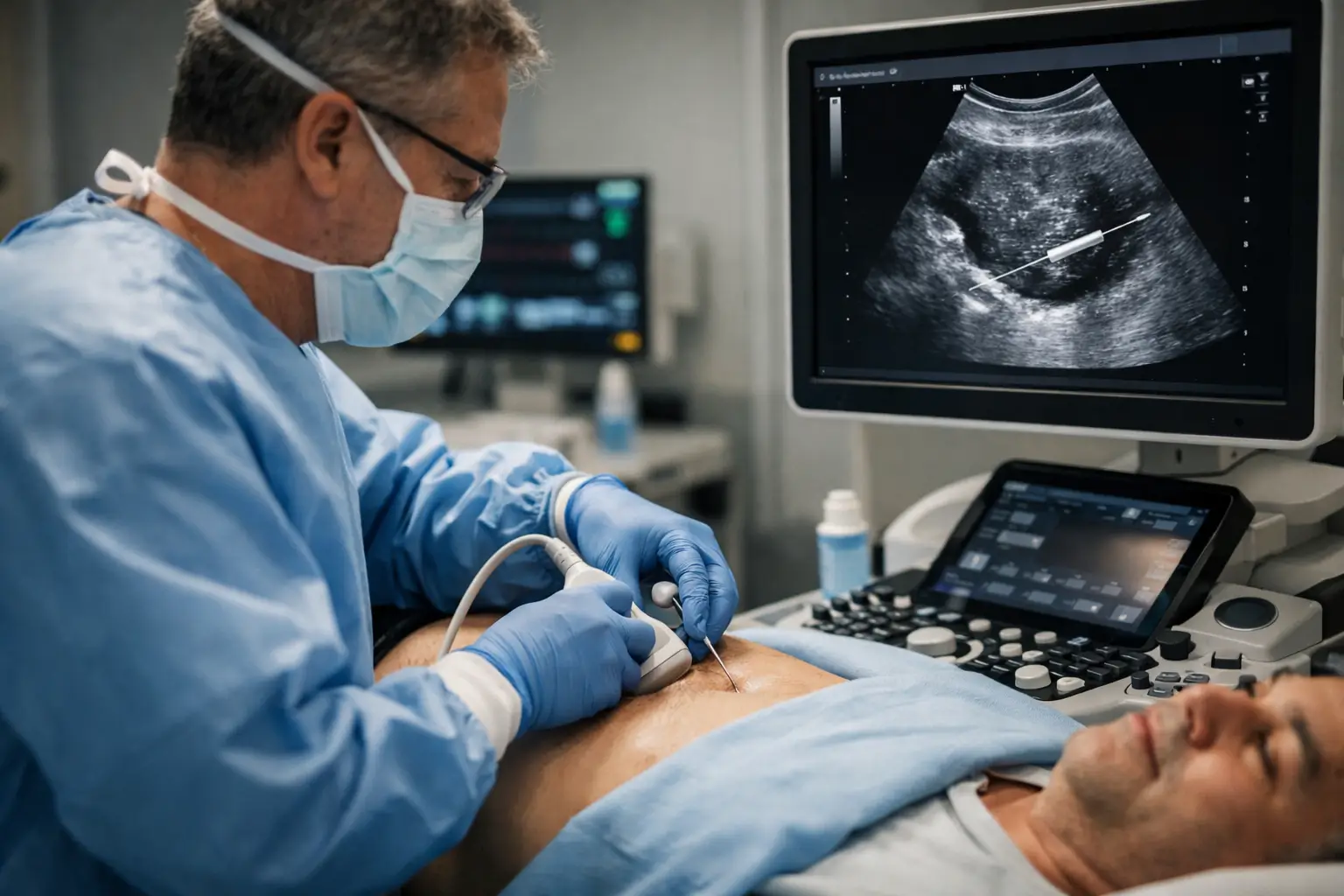
FNAC uses a very thin needle (22–25 gauge) to collect individual cells from a mass. The cells are smeared on a glass slide, stained, and examined by a pathologist. It provides cytological information — information about cell types and whether they appear cancerous. FNAC is quick, minimally invasive, and usually requires no anaesthesia for surface lesions.
What Is Core Needle Biopsy? for FNAC vs Core Needle Biopsy
Core needle biopsy uses a slightly larger needle (14–18 gauge) with a spring-loaded mechanism to remove a small cylindrical core of tissue — a tiny plug of tissue about the width of a pencil tip. This core is processed into paraffin-embedded sections that provide histological information — including the tissue architecture, tumour grade, hormone receptors, and molecular markers essential for cancer treatment planning.
Key Differences: FNAC vs Core Needle Biopsy
Sample Type
FNAC provides cytology (individual cells). Core needle biopsy provides histology (tissue architecture). Histology gives more complete information about tumour grade, invasion, and receptor status.
Needle Size & Pain
FNAC uses a very fine needle — comparable to a blood test needle — and causes minimal discomfort. Core needle biopsy uses a larger needle and requires local anaesthesia, causing mild to moderate discomfort during and after the procedure.
Accuracy
Both tests are highly accurate in experienced hands. FNAC has sensitivity of 85–95% for malignancy. Core biopsy achieves 96–99% sensitivity. However, FNAC is sufficient for initial diagnosis in many situations, and core biopsy is reserved for cases requiring more detailed tissue information.
Turnaround Time
FNAC reports are usually available in 24–48 hours. Core needle biopsy requires tissue processing, embedding, and sectioning — typically taking 3–5 working days for a standard report.
Cost
FNAC is generally 40–70% cheaper than core needle biopsy due to simpler processing requirements. At Edge Imaging, surface FNAC starts at ₹500 while core needle biopsies start at ₹2,000–₹4,000.
When Is FNAC Preferred?
- Initial evaluation of a palpable lump (neck, thyroid, breast, salivary gland)
- Suspected TB lymphadenitis where cytology is sufficient for diagnosis
- Confirming a benign cyst (fluid analysis)
- When a rapid, same-day preliminary answer is needed
- Recurrent tumours where cell type is already known
- Paediatric patients where minimising invasiveness is a priority
When Is Core Needle Biopsy Preferred?
- Breast cancer — receptor status (ER, PR, HER2) needed for treatment planning
- Lymphoma — tissue architecture essential for classification
- Sarcoma — histological subtyping guides treatment
- When FNAC result is indeterminate or atypical
- Before starting cancer chemotherapy or targeted therapy
- Liver and renal masses where histological grading affects prognosis
Can FNAC and Core Biopsy Be Done Together?
Yes, and this is sometimes done in a single session when the doctor anticipates needing both cytological and histological information. At Edge Imaging, our interventional radiologists can perform both procedures under image guidance in one visit, saving you time and cost.
FNAC vs Core Biopsy Cost in Delhi 2026
FNAC Cost
- Surface FNAC: ₹500–₹1,500
- USG-guided FNAC: ₹1,500–₹3,500
- CT-guided FNAC: ₹3,000–₹8,000
Core Needle Biopsy Cost
- USG-guided core biopsy: ₹2,500–₹5,000
- CT-guided core biopsy: ₹5,000–₹12,000
- Breast core biopsy with IHC: ₹5,000–₹15,000
Frequently Asked Questions
Q1. Which is more painful — FNAC or core needle biopsy?
FNAC causes minimal discomfort comparable to a blood test. Core needle biopsy requires local anaesthesia and may cause mild soreness for 1–2 days afterward. Neither is considered significantly painful when performed by a skilled radiologist.
Q2. Can FNAC diagnose cancer definitively?
FNAC can identify malignant cells with high accuracy (95%+) and is often sufficient for initial cancer diagnosis. However, for definitive treatment planning — especially for lymphoma, breast cancer receptor status, or sarcoma subtyping — core needle or excision biopsy may be additionally required.
Q3. Why did my doctor recommend FNAC first?
FNAC is typically the first-line investigation because it is quick, minimally invasive, and cost-effective. If FNAC results are inconclusive or if specific tumour typing is required, your doctor may then recommend a core biopsy.
Q4. Is core needle biopsy safer than FNAC?
Both procedures are extremely safe. FNAC has a marginally lower risk profile due to the smaller needle size. Core biopsies carry a slightly higher but still very low risk of bleeding, bruising, or infection — particularly for deep-seated lesions.
Q5. Does insurance cover both FNAC and core needle biopsy?
Yes, both procedures are typically covered by health insurance policies when medically indicated and referred by a registered physician. Check with your insurer for specific claim requirements.
Q6. How do I know which test I need?
Your doctor or radiologist will determine which test is most appropriate based on the location of the lump, your clinical history, and the level of diagnostic detail required. At Edge Imaging, our specialists provide pre-procedure consultation to recommend the optimal approach.
Q7. Can a negative FNAC rule out cancer completely?
A negative (benign) FNAC result significantly reduces the likelihood of cancer but does not completely rule it out — especially if the lump is growing or clinically suspicious. Follow your doctor’s advice regarding repeat testing or monitoring.
Q8. Where can I get both FNAC and core needle biopsy in West Delhi?
Edge Imaging & Diagnostics in West Delhi (Tagore Garden, Paschim Vihar, Moti Nagar) offers both FNAC and core needle biopsies with ultrasound and CT guidance by experienced interventional radiologists.
Book FNAC or Core Needle Biopsy at Edge Imaging Delhi
Whether your doctor has recommended FNAC or core needle biopsy, Edge Imaging & Diagnostics offers both procedures with state-of-the-art image guidance, same-day or next-day reporting, and complete transparency in pricing.
📍 Locations: Tagore Garden | Paschim Vihar | Moti Nagar | New Multan Nagar
✅ NABH Accredited | CGHS & DGHS Empanelled | Same-Day Reporting
📞 Call or WhatsApp to book your appointment today.
For more information, explore our related guide: FNAC Test in Delhi
For more information on this procedure, refer to the World Health Organization (WHO) guidelines on medical procedures.
Medical Disclaimer: This article is for educational purposes only. Always consult a qualified medical professional for diagnosis and treatment advice.