
 PV
 TG
 MN
 EM
 EI
 ND

 CT Scan
 PET CT
 Digital X-ray
 Ultrasound
 Amniocentesis

 Fetal Reduction
 Thermalytix Breast Screening
 Cardiology
 Lab Tests
 GAMCA Pre-Medical
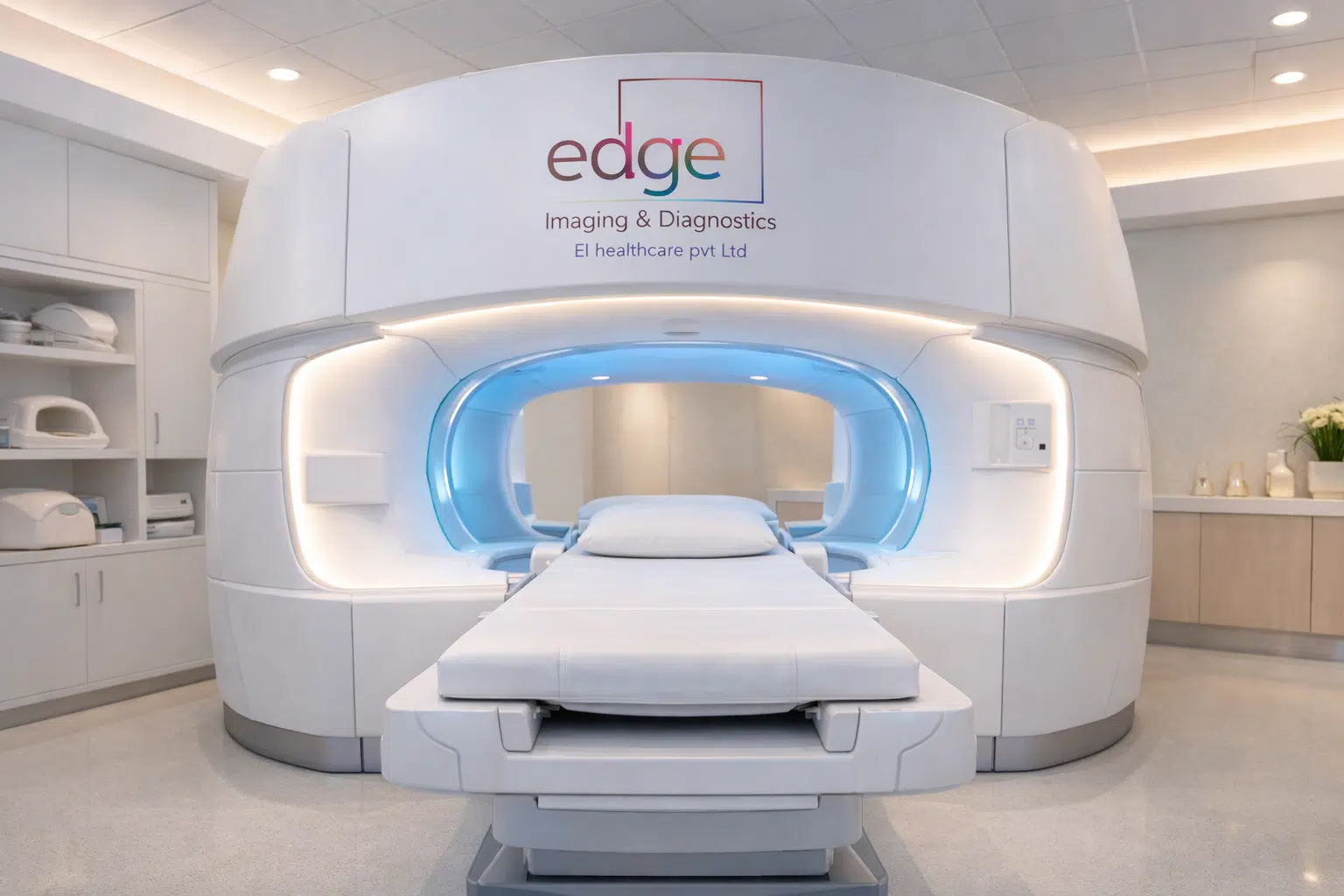
Somebody you know was diagnosed late. Or you turned forty. Or an advertisement promised that one scan could check your entire body — and now you are wondering whether a full body MRI is the sensible thing to do.
That instinct deserves a straight answer rather than a sales page. A whole body MRI is a real and genuinely powerful investigation, and for certain people it is the single best test available. For many others it is an expensive scan that finds things which were never going to harm them, and misses things it was never able to see.
This guide gives you both halves honestly: what a full body MRI actually detects, what it cannot detect, who benefits from it, who is likely to be disappointed by it, what happens when it finds something incidental, and what it costs in Delhi in 2026. By the end you will be able to decide — with your doctor — whether this is the right use of your money, or whether something else would serve you better.
The quick answer
A full body MRI (also called a whole body MRI) is a single sitting in which MRI images are acquired from roughly the head to the mid-thighs, using no radiation whatsoever. It takes about 45–90 minutes. In Delhi it generally costs in the region of ₹15,000–₹30,000, varying widely with the protocol and whether contrast is included.
It is excellent for surveying the bones, bone marrow, brain, spine, solid abdominal organs and soft tissues in one go — which is why it is a recognised test for conditions such as multiple myeloma, bone metastases and cancer surveillance in people with an inherited high-risk syndrome. It is not a complete cancer test, it cannot see everything, and for a healthy person with no symptoms and no risk factors, major radiology bodies do not recommend it as a routine screening scan. Whether it suits you depends entirely on why you want it.
Full body MRI cost in Delhi — and why quotes vary so much
This is what most people came here to find out, so it comes early. Full body MRI kitne ka hota hai? — indicatively, in Delhi in 2026, a whole body MRI generally falls in the region of ₹15,000–₹30,000. That is a wide band, and the width is not arbitrary. Five things move it:
| What changes the price | Why |
|---|---|
| How much of the body is covered | Head-to-mid-thigh is standard. Adding the full limbs or the whole skeleton adds scan time. |
| Plain or with contrast | A contrast study adds the agent, cannula and post-contrast sequences — see our contrast MRI (CEMRI) guide. |
| Which sequences are run | Diffusion-weighted whole-body imaging, dedicated spine sequences or a detailed brain study each add time. |
| Scanner and reporting | Magnet strength, coil coverage, and the time a radiologist spends reading several hundred images. |
| Bundled tests | Some “packages” add blood tests or consultations, which is not the same as a scan-only price. |
Two practical warnings before you compare quotes. First, a very low quote usually means a short protocol — a limited set of sequences, less coverage, and correspondingly less in the report. Second, ask what the report includes and who reads it. A whole body MRI generates a very large number of images, and the value you are paying for is a radiologist reading them carefully, not the minutes the machine was switched on. Indicative pricing across individual body parts is in our MRI scan cost in Delhi guide.
These are indicative market ranges to help you budget. They are not a quotation — please contact us for our current price for the protocol your doctor has advised.
What a full body MRI actually is
It is not a different machine and not a special kind of magic. It is the same MRI scanner, run as a planned sequence of overlapping stations that are stitched together to cover the body from the top of the head to the mid-thighs. Modern protocols usually include diffusion-weighted imaging, which is sensitive to areas of densely packed cells — the property that makes it useful for surveying bone marrow and lymph nodes.
You lie on the table while the stations are acquired in turn, so the scan is considerably longer than a single-region MRI. There is no radiation at any point, which is the fundamental difference between whole body MRI and a whole body CT.
What a full body MRI is genuinely good at
- Bone marrow across the whole skeleton. This is its outstanding strength. MRI sees marrow directly, which is why whole body MRI is used in multiple myeloma and for surveying bone metastases — frequently detecting marrow disease earlier than an X-ray skeletal survey or a bone scan.
- Solid organs — liver, kidneys, spleen, pancreas, adrenals, uterus, ovaries and prostate, all surveyed in one sitting.
- Brain and the entire spine, including the discs and the spinal cord.
- Lymph nodes throughout the neck, chest, abdomen and pelvis.
- Soft tissue masses and muscle disease anywhere in the covered area.
- Serial follow-up without radiation. Because it uses none, it can be repeated in someone who needs regular surveillance — a decisive advantage over repeated CT, particularly in younger patients.
What a full body MRI cannot do — the part usually left out
If you take one section from this page, make it this one. Knowing the limits is what stops a scan from giving you false reassurance.
- It is not a complete cancer test. No single scan is. A normal whole body MRI does not mean you do not have cancer — it means nothing was visible on those images, on that day, within the area covered.
- The lungs are its weak point. Air-filled lung tissue is poorly suited to MRI, and small lung nodules are far better seen on CT. If lung assessment is the concern, MRI is the wrong tool.
- Hollow organs are not properly assessed. The stomach, the bowel and the colon are not evaluated by whole body MRI. Colorectal cancer screening is done by colonoscopy or stool-based tests, not by a body scan.
- The breast is not adequately covered. Breast MRI is a dedicated, contrast-based study in a special coil. A whole body scan does not replace mammography or a breast ultrasound.
- Small or flat lesions can be invisible. Early cancers that have not yet formed a mass frequently show nothing at all.
- It says nothing about function. It will not tell you your blood pressure, your blood sugar, your cholesterol, your kidney function or your heart rhythm — and those are the things statistically far more likely to shorten an Indian adult’s life than an undetected tumour.
- The limbs below the mid-thigh and the extremities are outside the standard coverage.
- It is not a PET-CT. For staging many known cancers, PET-CT remains the appropriate study. They are different tests answering different questions.
Who genuinely benefits from a whole body MRI
There is a real and well-established list, and if you fall on it the scan can be extremely valuable. Whole body MRI is used, on a doctor’s advice, for:
- Multiple myeloma and related plasma cell disorders — for detection, assessment of extent, and follow-up. This is one of its strongest, most established roles.
- Suspected or known bone metastases, where marrow disease needs to be surveyed across the skeleton.
- Cancer surveillance in inherited high-risk syndromes — for example Li-Fraumeni syndrome and certain other genetic predisposition conditions, where regular whole body MRI is a recognised surveillance strategy precisely because it involves no radiation.
- Staging and follow-up of certain lymphomas and paediatric tumours, where avoiding repeated radiation matters a great deal.
- Cancer of unknown primary — when a secondary deposit has been found and the source is being looked for.
- Widespread bone or joint pain under investigation, and some inflammatory and muscle diseases affecting many regions at once.
- Suspected multifocal infection, including in children.
What these have in common is a specific clinical question spanning many body regions. That is the setting in which a whole body approach is genuinely superior to scanning one region at a time.
And who probably should not have one
If you are healthy, have no symptoms, no strong family history and no doctor’s recommendation, the honest position is this: major radiology and physician bodies do not recommend whole body MRI as a routine screening test for the general population, because it has not been shown to help people live longer, and because it carries real downsides that are easy to overlook when you are only thinking about what it might find.
Those downsides are not theoretical:
- Incidental findings are common, and the overwhelming majority are harmless. Cysts in the kidney or liver, small benign nodules, a haemangioma, a disc bulge, a slightly enlarged node — findings that would never have caused you any trouble.
- Each one starts a chain. A repeat scan in three months, then six, sometimes a biopsy. That means more cost, more appointments, and for many people months of low-grade worry about something that was never going to matter.
- False reassurance is the mirror risk. A clean whole body MRI can persuade someone to ignore a new symptom, or to skip a mammogram or a colonoscopy, because “the full body scan was normal”. That is precisely the situation in which a screening scan does harm.
- It substitutes for cheaper things that work better. Blood pressure, HbA1c, lipids, and the age-appropriate screening tests with actual evidence behind them cost a fraction of a whole body MRI and prevent far more disease.
None of this means the scan is useless — it means it should follow a question, not replace one. If a doctor who has examined you thinks you need it, it can be the best test available. If nobody has suggested it and you are simply anxious, the more useful first step is usually a consultation and a sensible set of basic tests. Our guide to the full body health checkup in Delhi covers what an evidence-based preventive workup actually contains — and it is a very different thing from a whole body scan, despite the similar names.
If it finds something incidental — what actually happens
This is worth understanding before you book, not after the report arrives.
Most incidental findings are classified by the radiologist into one of three broad groups. Clearly benign — a simple cyst, a typical haemangioma — needs nothing at all, and a good report will say so explicitly. Indeterminate — something that looks harmless but cannot be fully characterised — usually leads to a follow-up scan after an interval, on the sound logic that things which do not change over time are almost always benign. Suspicious — a small minority — leads to a targeted investigation, which may be a dedicated scan of that region or a biopsy.
Two things make this far less stressful. First, choose a centre where a radiologist will actually talk you through the report rather than handing over a document. Second, take the report to the doctor who knows your history. A finding read in isolation on the internet is frightening; the same finding read in the context of your age, symptoms and history is usually unremarkable.
Full body MRI vs CT vs PET-CT vs a health checkup
| Test | What it is for | Radiation |
|---|---|---|
| Full body MRI | Surveying bone marrow, brain, spine, solid organs, nodes and soft tissue — no radiation, so repeatable | None |
| Whole body CT | Fast, excellent for lungs, bone detail and trauma; used in emergencies and staging | Yes — significant |
| PET-CT | Metabolically active disease — staging and follow-up of known cancers | Yes |
| Health checkup (blood-based) | Diabetes, cholesterol, kidney, liver, thyroid, anaemia — the common conditions | None |
| Targeted screening | Mammography, cervical screening, colorectal screening — evidence-backed for specific cancers | Varies |
These are not competitors and none replaces another. A whole body CT is not a “cheaper full body MRI” — it delivers a substantial radiation dose and is not appropriate as a screening scan for a healthy person. The wider comparison of the two modalities is in our MRI vs CT scan guide.
Preparing for a full body MRI
- Bring the prescription and your history. The protocol depends entirely on the question. A myeloma survey, a metastasis survey and a surveillance scan are configured differently.
- Bring all previous scans and reports. On a whole body study, comparison is worth more than on any other scan — it is what turns an alarming incidental finding into a documented, unchanged, harmless one.
- Fasting is generally required only for certain protocols or when contrast is planned. Confirm at booking.
- Kidney function report (serum creatinine / eGFR) if contrast is prescribed.
- Declare all implants and metal — pacemaker or cardiac device, cochlear implant, aneurysm clip, neurostimulator, metal fragments in the eye, surgical hardware. Bring the implant card. This is the most important question you will be asked.
- Declare pregnancy or possible pregnancy.
- Wear entirely metal-free clothing and leave jewellery, watch, cards and phone outside.
- Plan for the length. Empty your bladder beforehand, and expect to be on the table considerably longer than for a single-region scan.
- If you are claustrophobic, say so at booking, not on the day. Lying still for over an hour is a genuinely different proposition from twenty minutes. An open MRI is far more tolerable for many people — our guide on open MRI vs closed MRI sets out the trade-offs honestly.
What the scan is like, and when the report comes
You lie on your back and the table moves through the scanner in stages as each station is acquired. The machine is loud; earplugs or headphones are given. Some abdominal sequences need short breath-holds. Between stations there are brief pauses, and you can usually speak to the radiographer. The single most useful thing you can do is stay still — on a study this long, movement in one station means repeating it.
A whole body MRI report generally takes longer than a routine scan — often a day or two — because there are several hundred images to read across many organ systems, and because comparison with previous studies takes time. That delay is the report being done properly. Ask when to expect it, how it will be shared, and whether you can discuss the findings with the radiologist.
Full body MRI at Edge Imaging & Diagnostics, West Delhi
Edge Imaging & Diagnostics is a NABH-accredited diagnostic centre in West Delhi offering MRI, CT, ultrasound, digital X-ray, pathology and image-guided procedures under one roof, with all studies reported by experienced radiologists. Whole body MRI is performed here on a protocol matched to the clinical question, and for patients who are claustrophobic or of larger build an open MRI option is available — which matters more on a long scan than on a short one.
We will also tell you honestly if we think a whole body MRI is not the right test for your situation, and what would serve you better. That conversation costs nothing and is worth having before you spend the money. Individual-region studies including MRI brain, MRI spine, MRI pelvis and MRI shoulder are frequently the more appropriate — and considerably less expensive — answer. We serve patients across Paschim Vihar, Punjabi Bagh, Rajouri Garden, Moti Nagar, Janakpuri, Tilak Nagar and nearby areas.
📩 Ask us on WhatsApp | Call 9555999960
Frequently asked questions
How much does a full body MRI scan cost in Delhi?
Indicatively, a full body MRI in Delhi generally costs in the region of ₹15,000–₹30,000, depending on how much of the body is covered, whether contrast is included, and which sequences are run. Packages that bundle blood tests or consultations are priced differently again. These are indicative market ranges, not a quotation — call 9555999960 or send us a message on WhatsApp for our current price.
Full body MRI kitne ka hota hai?
Delhi mein full body MRI aam taur par lagbhag ₹15,000 se ₹30,000 ke beech hota hai. Yeh price protocol par depend karta hai — kitna area cover ho raha hai, contrast lag raha hai ya nahin, aur kaunse sequences chal rahe hain. Exact price ke liye humein WhatsApp par prescription bhejein ya 9555999960 par call karein.
Can a full body MRI detect all cancers?
No, and no scan can. A whole body MRI is very good at surveying bone marrow, solid organs, lymph nodes and soft tissues, but it assesses the lungs poorly, does not evaluate the stomach, bowel or colon, and does not replace mammography for the breast. A normal result means nothing suspicious was visible in the area covered on that day — it is not a certificate of good health.
Is a full body MRI worth it for a healthy person with no symptoms?
Usually not as a routine screening test. Major radiology and physician bodies do not recommend whole body MRI for screening the general population, because it has not been shown to help people live longer and it frequently finds harmless incidental abnormalities that lead to further scans, biopsies and anxiety. It is valuable when there is a specific clinical reason. Discuss it with a doctor who knows your history before booking.
What are the benefits of a full body MRI?
It surveys many body regions in one sitting with no radiation at all, and it is outstanding at showing bone marrow across the whole skeleton — which is why it is used in multiple myeloma, in surveying bone metastases, and for repeated cancer surveillance in people with an inherited high-risk syndrome, where avoiding radiation matters.
Does a full body MRI use radiation?
No. MRI uses a magnetic field and radio waves, with no ionising radiation at any stage. This is its main advantage over a whole body CT scan, which does deliver a significant radiation dose.
How long does a full body MRI take?
Usually about 45–90 minutes on the table, depending on the protocol and whether contrast is used, plus registration, changing and the safety check. It is considerably longer than a single-region MRI, which is worth knowing if you find scanners difficult.
Full body MRI or full body CT scan — which is better?
Neither is simply better; they show different things. MRI is superior for bone marrow, brain, spine and soft tissue and uses no radiation. CT is faster and far better for the lungs and fine bone detail, but delivers a substantial radiation dose, which is why it is not used to screen healthy people. Your doctor chooses based on the question being asked.
Is a full body MRI the same as a full body health checkup?
No — the similar names cause a lot of confusion. A full body health checkup is mainly blood and basic tests that assess diabetes, cholesterol, kidney, liver, thyroid and anaemia. A full body MRI is an imaging scan that shows structure. They answer completely different questions, and for most people the checkup is the more useful annual investment.
What if the scan finds something unexpected?
Incidental findings are common and the great majority are harmless — simple cysts, benign nodules, disc bulges. Clearly benign findings need nothing; indeterminate ones usually get a follow-up scan after an interval; the small number that look suspicious get a targeted test. Take the report to the doctor who knows your history rather than interpreting it alone.
Do I need contrast for a full body MRI?
Not always. Many whole body protocols, particularly diffusion-weighted surveys, are done without contrast. Contrast is added when the clinical question requires it, and it increases the cost. Our contrast MRI guide explains what it does and its safety checks.
Can a full body MRI be done if I am claustrophobic?
It can, but plan for it. A whole body study means lying still far longer than a routine scan, so tell the centre at the time of booking. An open MRI is considerably more comfortable for many people, and knowing in advance lets the team plan the appointment properly rather than abandoning it partway.
Can I have a full body MRI in pregnancy?
MRI uses no radiation, but a whole body study in pregnancy would only be done for a compelling clinical reason, and gadolinium contrast is generally avoided. Always declare a known or possible pregnancy before the scan.
The bottom line
A full body MRI is a serious, capable investigation — not a gimmick, but not a health guarantee either. For someone with myeloma, suspected bone metastases, or an inherited cancer syndrome needing radiation-free surveillance, it is often the best test in existence. For a healthy person hoping one scan will rule everything out, it will not do that, and it may hand back findings that cost money and sleep without ever having threatened them.
So the question to settle before booking is not “how much does it cost” but “what am I actually trying to find out?” Take that question to a doctor. If a whole body MRI is the right answer, it is money extremely well spent. If it is not, you will have saved a great deal — and probably ended up with something that helps you more.
MRI, CT, ultrasound, digital X-ray, pathology and image-guided procedures at Edge Imaging & Diagnostics, West Delhi — a NABH-accredited diagnostic centre — are performed and reported by experienced radiologists. This article is general patient information only. It is not a diagnosis, not medical advice for your individual situation, and not a substitute for consultation with a qualified doctor. Whether a whole body MRI is appropriate for you, and with what protocol, is a decision for your treating doctor together with the reporting radiologist. No imaging test can detect or exclude all disease. Costs mentioned are indicative market ranges for Delhi and are not a quotation — please contact us for current pricing. Last updated: 2026.