
 PV
 TG
 MN
 EM
 EI
 ND

 CT Scan
 PET CT
 Digital X-ray
 Ultrasound
 Amniocentesis

 Fetal Reduction
 Thermalytix Breast Screening
 Cardiology
 Lab Tests
 GAMCA Pre-Medical
PET CT Scan in Delhi
Whole-body 18F-FDG PET CT at ₹ 8,999, plus PSMA, DOTANOC, FAPI, FDOPA and Choline studies. Reported by DNB nuclear medicine doctors. Send us your prescription on WhatsApp for today’s exact rate and the earliest slot.
What a PET CT scan actually shows
A PET CT scan is two examinations captured in one sitting. The CT half maps your anatomy — where every organ, node and lesion physically sits. The PET half maps activity: a small amount of a radioactive tracer is injected into a vein, it collects wherever cells are behaving abnormally, and the scanner records where it went. The two images are then laid over one another, so your doctor can see not only that something is there, but whether it is metabolically active.
That distinction is the whole point. A CT or an MRI can show a 2 cm node in your chest. Only a PET CT can suggest whether that node is live disease, scar tissue left over from treatment, or an old infection. It is why PET CT is used for staging a newly diagnosed cancer, for checking whether treatment is working, for finding recurrence when a tumour marker starts rising, and for locating an unknown primary when a secondary has already been found.
PET CT is not a general health check-up, and it is not a substitute for a CT or an MRI your doctor has separately asked for. It answers a specific question, and it answers it well.
Which tracer does your prescription need?
Most people arrive assuming a PET CT is one test. It is not — the tracer changes with the disease, and so does the price. This table is here so you can read your own prescription before you call.
Tracer guide
| Tracer | Usually prescribed for |
|---|---|
| 18F-FDGFluorodeoxyglucose — the standard tracer, used in the large majority of PET CT scans. | Staging and restaging of most solid cancers and lymphoma, checking response to chemotherapy or radiotherapy, searching for an unknown primary, and selected cardiac and epilepsy studies. |
| 68Ga-PSMABinds prostate-specific membrane antigen. | Prostate cancer — staging high-risk disease before treatment, and finding recurrence when PSA starts rising again after surgery or radiotherapy. |
| 68Ga-DOTANOCBinds somatostatin receptors. | Neuroendocrine tumours, carcinoid, phaeochromocytoma and paraganglioma, medullary thyroid cancer — and to check whether a tumour is suitable for receptor-targeted therapy. |
| 68Ga-FAPIBinds fibroblast activation protein. A newer tracer, used selectively. | Tumours that show up poorly on FDG or sit in a dense fibrous background — pancreatic, gastric signet-ring, cholangiocarcinoma and peritoneal disease are the usual reasons a doctor asks for it. |
| 18F-FDOPAFollows the dopamine pathway. Available as a brain study or whole body. | Telling recurrent brain tumour apart from radiation change, assessing parkinsonian syndromes, and in neuroendocrine tumours, neuroblastoma and congenital hyperinsulinism. |
| 18F-CholineFollows cell-membrane synthesis. | Prostate cancer recurrence where PSMA is not suitable, hepatocellular carcinoma, and locating a parathyroid adenoma. |
| 68Ga-ExendinBinds the GLP-1 receptor. A specialised study. | Localising an insulinoma, and congenital hyperinsulinism in children. |
| 68Ga-TrivehexinBinds αvβ6 integrin, a marker carried by several epithelial cancers. A newer tracer, used selectively. | Prescribed in selected pancreatic, head and neck, and lung cancers where your doctor wants αvβ6-targeted imaging rather than FDG. |
Your treating doctor chooses the tracer, not you and not us. This table exists only so that the words on your prescription stop being a mystery. If your prescription names a tracer that is not listed here, send it to us anyway — we will tell you honestly whether we can do it or where you should go.
PET CT scan price in Delhi
Most centres in Delhi will not put a PET CT price on their website. We will. These are our prices — there is no inflated “before” figure and no fake discount attached to them.
Scan prices
| Study | Price | |
|---|---|---|
| 18F-FDG PET CT — whole bodyThe standard whole-body cancer study. This is the scan most prescriptions ask for. | ₹ 8,999 | Book now |
| 18F-FDG PET CT — brainA dedicated brain study, prescribed for selected neurological and brain tumour questions. | ₹ 14,000 | Book now |
| 18F-FDG PET CT — brain with whole bodyBrain and whole-body acquisition in the same sitting. | ₹ 16,000 | Book now |
| 18F-FDG PET CT — whole body with triple phaseWhole body with an additional triple-phase acquisition, when your doctor specifically asks for it. | ₹ 16,500 | Book now |
| 68Ga-PSMA PET CTProstate cancer staging and recurrence. | ₹ 18,000 | Book now |
| 68Ga-DOTANOC PET CTNeuroendocrine tumours and receptor assessment. | ₹ 22,000 | Book now |
| 68Ga-FAPI PET CTFor tumours that show up poorly on FDG. | ₹ 24,000 | Book now |
| 18F-FDOPA PET CT — brainBrain tumour recurrence and movement disorders. | ₹ 24,000 | Book now |
| 18F-FDOPA PET CT — whole bodyNeuroendocrine tumours, neuroblastoma, hyperinsulinism. | ₹ 24,000 | Book now |
| 18F-Choline PET CTProstate recurrence, hepatocellular carcinoma, parathyroid adenoma. | ₹ 24,000 | Book now |
| 68Ga-Exendin PET CTInsulinoma and congenital hyperinsulinism. | ₹ 30,000 | Book now |
| 68Ga-Trivehexin PET CTBinds αvβ6 integrin. A newer, highly specialised study. | ₹ 30,000 | Book now |
Add-ons, only if your scan needs them
| Item | Price |
|---|---|
| AnaesthesiaNeeded only when a patient cannot stay still for the acquisition — young children, and some patients with severe pain or claustrophobia. | ₹ 7,000 |
| PET CT compared against an earlier CTReading your new PET CT side by side with a prior outside CT, when your doctor asks for a comparison. | ₹ 6,000 |
| Duplicate film or duplicate CDA second copy of your images, per copy. | ₹ 3,000 |
| Oxygen support during the scanCharged only if a patient actually requires it. | ₹ 2,000 |
Want today’s exact price?
These are our current prices and rates are revised from time to time. Tracer prices in particular move with the cost of the isotope.
Send a photo of your prescription on WhatsApp and we will reply with today’s exact price for your specific study, what is included, and the earliest slot — you do not need to travel to the centre or wait on hold just to ask the rate.
Who reads your PET CT
A PET CT is only as good as the doctor reporting it. A nuclear medicine physician — not a general radiologist — is the specialist trained to interpret tracer uptake. These are the doctors who report ours.
- Dr. Swagat Dash
MBBS, DNBNuclear medicine and PET CT imaging, with over a decade of clinical practice in nuclear medicine. - Dr. Pradeep Chaurasiya
MBBS, DNBPET CT imaging, nuclear medicine and molecular imaging. - Dr. Nishant Thapar
MBBS, MD (Radiology)Managing Director and Chief Radiologist, Edge Imaging & Diagnostics. Reports the CT component and cross-sectional correlation. - Radiation Safety OfficerA certified Radiation Safety Officer supervises tracer handling, dose calibration and radiation-safety protocol at the centre.
Where your PET CT is done
We want to be straight with you about this, because a PET CT is not something every diagnostic centre can run. It needs a cyclotron supply chain, a licensed hot lab and a nuclear medicine team.
Your PET CT is performed at our nuclear medicine unit, Neurad Diagnostic & Healthcare LLP, in Paschim Vihar — the same group as Edge Imaging & Diagnostics, a short distance from our Paschim Vihar centre. Booking through either brand reaches the same team and the same scanner.
One practical advantage of that unit is a Gallium-68 generator on the premises. Ga-68 has a half-life measured in about an hour, so a centre without its own generator has to buy in each dose and schedule around a delivery. Having the generator in-house is why PSMA, DOTANOC, FAPI and Exendin studies can be scheduled on working days rather than only when a shipment arrives.
- AddressB-3, opposite Metro Pillar No. 233, near Paschim Vihar West metro station, New Multan Nagar, Paschim Vihar, New Delhi 110056.
- Nearest metroPaschim Vihar West, Green Line — the centre is opposite pillar 233, a short walk from the station.
- TimingsMonday to Saturday, 8:00 am to 5:00 pm. Closed on Sunday. PET CT is a scheduled study, so please fix a slot before you travel.
- Phone and WhatsApp8368225620 — the same number on WhatsApp. Send the prescription and we will do the rest.
How to prepare for a PET CT scan
Preparation matters more for a PET CT than for almost any other scan. A tracer that has been taken up by your muscles instead of your tumour makes for a poor report, and the causes are usually avoidable.
- Bring the prescriptionA valid prescription or referral from a qualified doctor is required for every PET CT study. This is a regulatory requirement, not a formality — without it we cannot inject a radiopharmaceutical.
- Fast before the scanNothing to eat for about six hours before your appointment. Plain water is not only allowed, it helps — keep drinking it. No sweetened drinks, no tea or coffee with sugar, no chewing gum or mints.
- If you are diabetic, tell us when you bookFDG competes with glucose, so a high blood sugar on the day can spoil the scan or force a reschedule. Your sugar is checked at reception before injection. Insulin timing has to be planned around the appointment — do not change any medicine on your own; call us and we will send written instructions for your case.
- No strenuous exercise for 24 hoursGym, heavy lifting, long walks and even a strenuous commute make muscle light up on the images. Take it easy the day before.
- Warm, metal-free clothingLoose clothes with no zips, hooks, coins or jewellery. Being cold activates brown fat, which shows up brightly and can obscure findings in the neck and chest — so dress warm, especially in winter.
- Bring your previous recordsEarlier CT, MRI or PET films and CDs, biopsy and histopathology reports, and a list of the treatment you have had. A PET CT read against your previous imaging is a far more useful report than one read blind.
- Plan for half a dayThe scan acquisition itself is short, but the tracer needs an uptake period after injection. Bring an attendant if you would like one, and something to read.
What happens on the day
Knowing the sequence takes most of the anxiety out of it. Here is the shape of a typical FDG appointment.
-
Registration and consent. Your prescription and previous records are checked, you are asked about pregnancy, breastfeeding, diabetes, recent surgery, chemotherapy and radiotherapy dates, and you sign consent.
-
Blood sugar check. A finger-prick test. If your reading is too high the technologist and the nuclear medicine doctor decide whether to wait, correct it, or reschedule — scanning at a high sugar simply wastes your money.
-
Injection. A cannula is placed and the tracer is given. It is a normal intravenous injection; it does not burn, and it does not make you feel anything.
-
The uptake period. You rest quietly in a dedicated room for roughly an hour while the tracer distributes. This is the part people are not expecting. No phone scrolling with a raised arm, no walking about, no talking at length — muscles that work now will glow later. Just sit or lie still.
-
Emptying your bladder. Tracer is cleared through the kidneys, so you are asked to pass urine immediately before the acquisition.
-
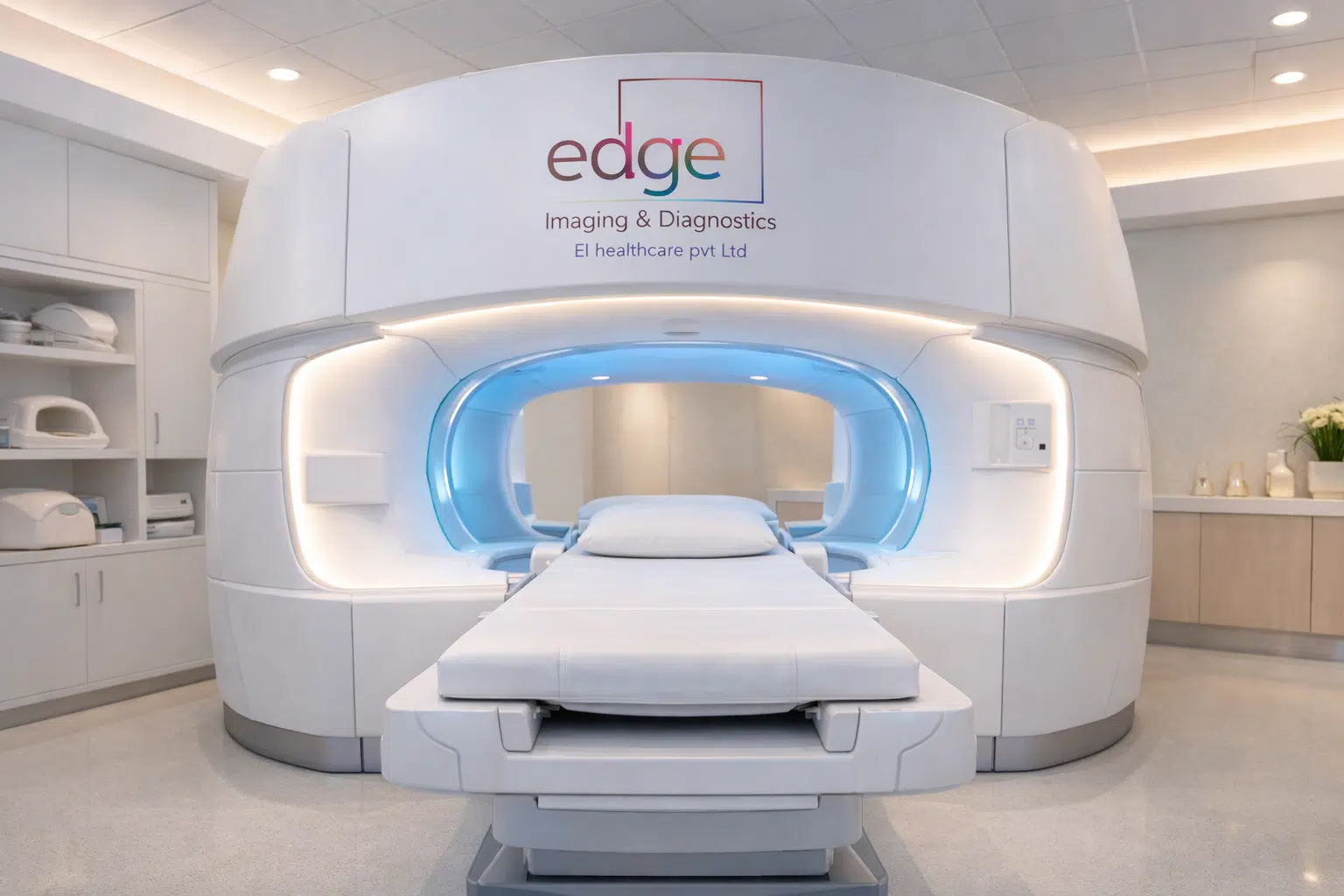
The scan. You lie on the couch with your arms usually above your head and the table moves slowly through the ring. The acquisition itself commonly takes twenty to forty minutes depending on the study and your height. The scanner is an open ring, not a tunnel, so it is far less confining than an MRI.
-
Going home. Drink plenty of water for the rest of the day to flush the remaining tracer. As a routine precaution, keep a little distance from pregnant women and infants for the rest of the day. You can eat normally, drive and go back to work.
Plan on being at the centre for about two to three hours in total. Reports for routine studies are typically ready within 24 hours; a complex case read against prior imaging can take longer, and we will tell you which yours is when you book rather than after.
Radiation, safety, and who should not have a PET CT
A PET CT does involve ionising radiation, and you deserve a straight answer about it rather than the phrase “perfectly safe”.
A whole-body FDG PET CT typically delivers an effective dose in the region of 10 to 25 millisieverts, depending on your body weight, the injected activity, and whether a diagnostic-quality contrast CT is included alongside the low-dose attenuation CT. For scale, natural background radiation is roughly 2 to 3 mSv a year. So a PET CT is a real dose — several years’ worth of background in one sitting — and that is exactly why it is prescribed for a defined clinical question rather than used as a screening test.
For someone being staged for cancer, or checked for recurrence, the information gained is generally considered to outweigh that dose comfortably. That judgement belongs to your treating doctor, and it is a conversation worth having with them.
Tell us before the scan if
-
You are or might be pregnant. PET CT is generally avoided in pregnancy and is done only where there is no alternative and the benefit clearly justifies it.
-
You are breastfeeding. The scan can usually still be done, but you will be given specific instructions about expressing milk and about close contact with the baby afterwards.
-
You are diabetic, or your blood sugar has been running high.
-
You cannot lie still for half an hour, or you are severely claustrophobic or in significant pain — this is worth planning for in advance rather than discovering on the couch.
-
You have had recent surgery, a biopsy, radiotherapy, chemotherapy or an injection into a joint, and the dates. Healing tissue takes up FDG, and knowing the dates changes how the images are read.
What a PET CT cannot tell you
This is the section most centres leave out. We would rather you knew the limits before you spend the money.
-
It is not proof of cancer. A PET CT reports metabolic activity, not a diagnosis. A hot spot raises a suspicion; a biopsy confirms it. Where a tissue diagnosis is needed, PET CT is often used to choose the best site to biopsy, not to replace it.
-
Infection and inflammation look like cancer on FDG. This matters a great deal in India. Active tuberculosis, sarcoidosis, an abscess, a recent surgical wound and even an inflamed joint can all be intensely FDG-avid. This is the single most common reason a PET CT is over-read, and it is why your clinical history and previous imaging matter so much.
-
Some cancers are quiet on FDG. Many prostate cancers, low-grade lymphoma, mucinous adenocarcinoma, some renal and hepatocellular cancers, and certain neuroendocrine tumours take up little FDG. That is precisely why the other tracers exist — a normal FDG scan does not always mean no disease.
-
Very small lesions can be missed. Below roughly five to eight millimetres, a deposit may sit under the resolution of the scanner regardless of how active it is.
-
The brain, kidneys and bladder are normally bright. These organs take up or excrete FDG as part of normal physiology, which can mask disease in and around them. Different tracers and different protocols are used when those areas are the question.
-
High blood sugar degrades the study. If glucose is high at the time of injection, FDG is diluted through the body and tumour uptake drops. It is not a formality when reception asks to check your sugar.
None of this makes a PET CT a poor test. It makes it a precise instrument that answers a precise question — which is how it should be used, and how a good nuclear medicine report will read.
PET CT scan in Delhi — common questions
What is the cost of a PET CT scan in Delhi?
At Edge Imaging the price for a whole-body 18F-FDG PET CT is ₹ 8,999. Specialised tracers cost more because the isotope costs more: 68Ga-PSMA ₹ 18,000, 68Ga-DOTANOC ₹ 22,000, and 68Ga-FAPI, 18F-FDOPA and 18F-Choline ₹ 24,000 each. Rates are revised from time to time, so send us your prescription on WhatsApp at 8368225620 and we will confirm today’s exact price for your study.
Why is a PSMA or DOTANOC PET CT so much more expensive than FDG?
Because of the isotope. FDG is fluorine-18 based and is produced in bulk by cyclotron. PSMA, DOTANOC, FAPI and Exendin are gallium-68 studies, and Ga-68 has a half-life of about an hour — it cannot be stockpiled and each patient dose is effectively made fresh. The tracer, not the scanner time, is what drives the price.
How long does a PET CT scan take?
The acquisition on the scanner is commonly twenty to forty minutes. What takes the time is the uptake period — roughly an hour of quiet rest after the injection while the tracer distributes. Plan on being at the centre for about two to three hours from arrival to leaving.
Do I need to fast before a PET CT?
Yes. Nothing to eat for about six hours beforehand. Plain water is encouraged — but no sugar in any form, including sweetened tea or coffee, soft drinks, chewing gum and mints, because sugar competes directly with the FDG tracer.
I am diabetic. Can I still have a PET CT?
Yes, but it has to be planned. Your blood sugar is checked at reception before the injection, and if it is too high the scan may need to be rescheduled because the images would not be reliable. Insulin and oral medication timing has to be worked around the appointment. Tell us you are diabetic when you book and we will send written instructions rather than leaving you to guess — and please do not stop or change any prescribed medicine on your own.
Is a PET CT scan painful, and how much radiation is involved?
The only discomfort is the intravenous cannula. The scan itself is painless and the scanner is a short open ring, not a long tunnel. A whole-body FDG PET CT typically involves an effective dose in the region of 10 to 25 millisieverts, against a natural background of roughly 2 to 3 millisieverts a year. It is a real dose, which is why the scan is done for a specific clinical question and not as a routine health check.
Do I need a doctor’s prescription for a PET CT scan?
Yes, always. A valid prescription or referral from a qualified doctor is required for every PET CT study. This is a regulatory requirement for administering a radiopharmaceutical, and it is also how the reporting doctor knows what question your scan is meant to answer.
How soon will I get my PET CT report?
Routine studies are typically reported within 24 hours. A complex case being read against your previous imaging can take longer. We will tell you which applies to you at the time of booking rather than afterwards.
Can a PET CT scan confirm that I have cancer?
No. A PET CT shows where cells are metabolically active, which raises or lowers suspicion, guides staging and often shows the best place to take a sample from. A tissue diagnosis still comes from a biopsy. Infection, tuberculosis, sarcoidosis and healing surgical sites can all appear active on an FDG scan, which is why your history and previous films matter when the scan is reported.
Where is your PET CT scan centre in Delhi?
PET CT is done at our nuclear medicine unit at B-3, opposite Metro Pillar No. 233, near Paschim Vihar West metro station, New Multan Nagar, Paschim Vihar, New Delhi 110056 — run by Neurad Diagnostic & Healthcare LLP, the same group as Edge Imaging & Diagnostics. It is open Monday to Saturday, 8:00 am to 5:00 pm, and closed on Sunday. PET CT is a scheduled study, so please fix a slot on 8368225620 before you travel.
Holding a PET CT prescription? Send us a photo of it on WhatsApp. We will reply with today’s exact price for that specific study, the written preparation instructions, and the earliest slot.