
 PV
 TG
 MN
 EM
 EI
 ND

 CT Scan
 PET CT
 Digital X-ray
 Ultrasound
 Amniocentesis

 Fetal Reduction
 Thermalytix Breast Screening
 Cardiology
 Lab Tests
Irregular periods, unexplained weight gain, acne, extra facial hair — and now someone has mentioned “PCOD” or “PCOS.” It is unsettling, and the first thing most women want to know is simple: what tests do I actually need to find out, and is this something to be frightened of?
The reassuring truth is that PCOS is common, very manageable, and diagnosed with a clear, straightforward set of tests — not one scary scan. This guide walks you through exactly which scans and blood tests confirm PCOD/PCOS, what each one checks, what to expect, and how to prepare, so you can approach it calmly and informed.
The quick answer
There is no single test for PCOS. It is diagnosed by putting a few pieces together: your symptoms and cycle history, a pelvic (usually transvaginal) ultrasound to look at your ovaries, and a blood hormone panel. Your doctor combines these to make the diagnosis — which is why an ultrasound alone, or a blood test alone, is rarely the full picture.
First, what are PCOD and PCOS?
Both relate to how the ovaries function. PCOD (polycystic ovarian disease) describes ovaries that develop many small follicles and release eggs irregularly. PCOS (polycystic ovary syndrome) is the broader hormonal syndrome, where irregular ovulation combines with hormonal imbalance and its effects — irregular periods, acne, extra hair growth, weight changes. In everyday use the terms overlap, and the tests to investigate them are essentially the same.
The tests that actually diagnose PCOS
1. Pelvic / transvaginal ultrasound (the key scan)
A pelvic ultrasound — usually transvaginal (TVS) — is the central scan. It lets the radiologist see your ovaries and count the small follicles around them (the classic “string of pearls” appearance), check the size of the ovaries, and look at the lining of the uterus. A transvaginal scan gives the clearest view; if that is not suitable, an abdominal pelvic ultrasound is used instead. It is quick, safe and radiation-free.
2. Blood hormone panel
Blood tests reveal the hormonal side of the picture. Depending on your doctor, this may include:
- LH and FSH — the pituitary hormones that drive ovulation.
- Testosterone (and other androgens) — often mildly raised in PCOS, linked to acne and hair growth.
- AMH — frequently higher when there are many follicles.
- Prolactin and TSH (thyroid) — checked because thyroid and prolactin problems can mimic PCOS symptoms.
- Fasting glucose and insulin — because insulin resistance is common in PCOS.
3. Metabolic checks your doctor may add
Because PCOS is linked with insulin resistance, doctors often add a fasting sugar or HbA1c and a lipid profile to check your metabolic health — not to alarm you, but because catching and managing these early is exactly what keeps PCOS well-controlled.
Why the ultrasound matters so much
The ultrasound is what lets your doctor actually see the ovaries rather than infer from symptoms alone. It confirms the polycystic appearance, rules out other causes of your symptoms such as an ovarian cyst, and gives a baseline to monitor over time. Paired with your blood results, it turns “maybe PCOS” into a clear, confident diagnosis — and a clear diagnosis is the first step to feeling better.
What to expect and how to prepare
- Timing: doctors often prefer the ultrasound in the early part of your cycle — your centre will advise the best day.
- Fasting: if a fasting glucose, insulin or lipid test is included, you will usually be asked to fast for a few hours — check when you book.
- The scan itself: a transvaginal ultrasound is quick and done gently by an experienced radiologist; tell the team if you would prefer a female staff member present, and they will accommodate you.
- Carry your prescription and cycle dates so the right tests are done on the right day.
A calm word about PCOS
A PCOS diagnosis is not something to panic about. It is one of the most common hormonal conditions in women, and with the right diagnosis it is very manageable — through lifestyle, and where needed, medical guidance. The tests exist not to frighten you but to give you and your doctor a clear map, so the right steps can begin. Many women feel a real sense of relief once they finally have answers.
Get your PCOS scans and tests at Edge Imaging & Diagnostics, West Delhi
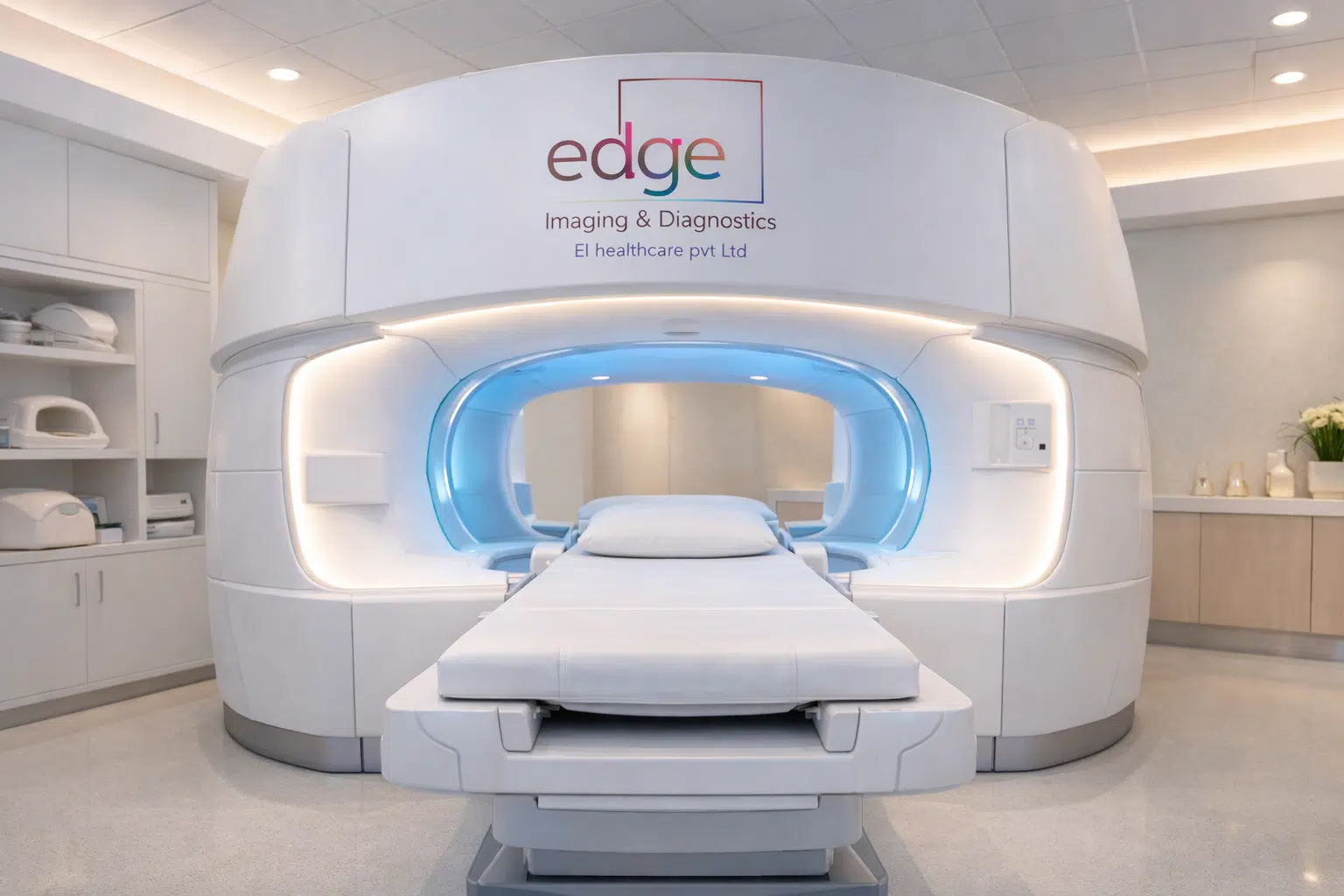
Edge Imaging & Diagnostics is a NABH-accredited centre where your pelvic ultrasound is performed by experienced radiologists and your hormone and metabolic blood tests are done in an in-house pathology lab — everything for a PCOS workup under one roof, in a comfortable, respectful setting, with same-day reporting on most tests. For pricing, our ultrasound cost in Delhi guide gives the ranges, and a quick message with your prescription gets you an exact quote.
📩 Book your PCOS scan & tests on WhatsApp | Call 9555999960
If you are trying to conceive with PCOS, the scan that shows whether you are actually ovulating in a given cycle is a follicular study (folliculometry) — a short series of scans that tracks a follicle’s growth and confirms rupture. It is also how ovulation-induction medication is monitored safely.
Frequently asked questions
What tests confirm PCOS?
PCOS is diagnosed by combining your symptoms and cycle history with a pelvic (usually transvaginal) ultrasound of the ovaries and a blood hormone panel. No single test confirms it on its own — your doctor puts the pieces together.
Is an ultrasound alone enough to diagnose PCOS?
Not usually. The ultrasound shows the ovaries and follicles, but a full diagnosis also considers your symptoms and hormone blood tests, because polycystic-looking ovaries alone do not always mean PCOS.
Do I need a transvaginal (TVS) ultrasound, or is an abdominal one fine?
A transvaginal scan gives the clearest view of the ovaries and is usually preferred. If it is not suitable — for example, if you are not sexually active or prefer not to — an abdominal pelvic ultrasound is used instead. Your comfort is respected either way.
What is the difference between PCOD and PCOS?
PCOD refers to ovaries with many small follicles and irregular egg release, while PCOS is the broader hormonal syndrome with its wider symptoms. In practice the terms overlap, and the tests to investigate them are the same.
Do I need to fast for PCOS blood tests?
Often yes, if the panel includes fasting glucose, insulin or a lipid profile. Ask your centre when you book so you fast for the right duration.
Is PCOS serious?
PCOS is very common and highly manageable once diagnosed. The tests simply give you and your doctor a clear picture so the right lifestyle and, where needed, medical steps can begin. It is not a cause for panic.
The bottom line
Investigating PCOD/PCOS is not one frightening test — it is a simple, clear set: a pelvic ultrasound to see your ovaries, a hormone blood panel, and a few metabolic checks. Done together at one reliable centre, they turn worry into answers — and answers are exactly what let you take control and feel like yourself again.
PCOS-related ultrasound and pathology at Edge Imaging & Diagnostics, West Delhi — a NABH-accredited diagnostic centre — are performed and reported by experienced radiologists and lab specialists. This article is for general information only and does not replace your doctor’s diagnosis or advice. Last updated: 2026.