
 PV
PV TG
TG MN
MN EM
EM EI
EI ND
ND
 CT Scan
 PET CT
 Digital X-ray
 Ultrasound
 Amniocentesis
 Fetal Reduction
 Thermalytix Breast Screening
 Cardiology
 Lab Tests
 GAMCA Pre-Medical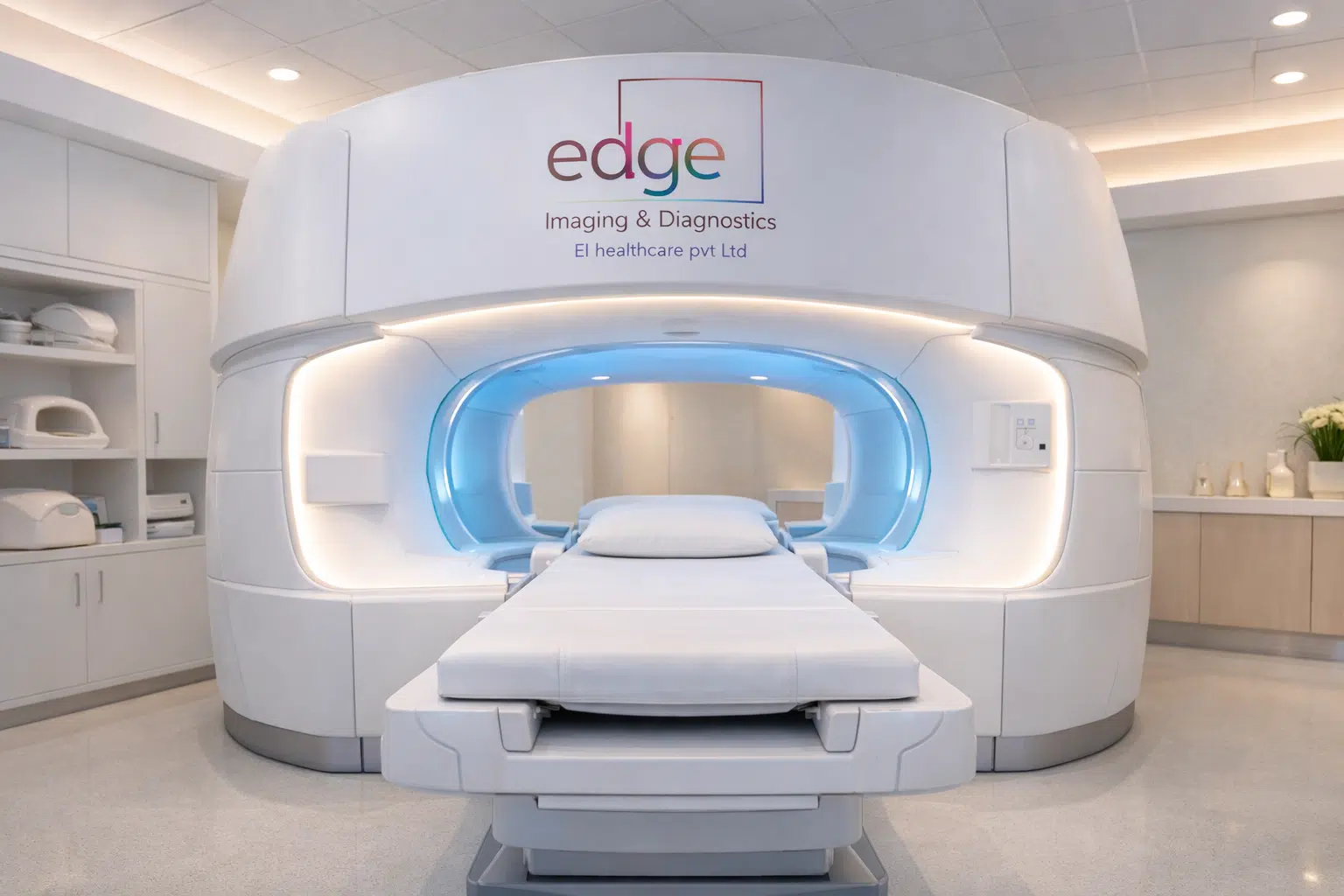
If you have a raised PSA or an abnormal prostate finding, the traditional approach was to take random samples from the prostate and hope they hit any cancer. Today there is a smarter, more accurate way. An MRI-fusion prostate biopsy in Delhi combines a detailed prostate MRI with live ultrasound so the needle is guided precisely into the exact suspicious area — catching significant cancers that random biopsies can miss, while avoiding unnecessary sampling. At Edge Imaging & Diagnostics in Paschim Vihar, West Delhi, MRI-fusion (MRI-targeted) prostate biopsy is offered for accurate, targeted diagnosis.
This guide explains what an MRI-fusion prostate biopsy is, how it works, who should consider it, and how it compares to a standard TRUS biopsy.
Reviewed by Dr. Nishant Thapar, MBBS, MD (Radiodiagnosis), Founder — Edge Imaging & Diagnostics, Paschim Vihar, New Delhi.
What Is an MRI-Fusion Prostate Biopsy?
An MRI-fusion prostate biopsy is an advanced, targeted biopsy technique. First, a detailed multiparametric MRI (mpMRI) of the prostate identifies any suspicious areas and grades them (using the PI-RADS system). During the biopsy, special software “fuses” this MRI map with live ultrasound, so the radiologist can guide the needle directly into the suspicious lesion rather than sampling the prostate at random. The result is a biopsy that is aimed at exactly where cancer is most likely to be.
How MRI and Ultrasound Fusion Works
The prostate MRI is done in advance and marks the location of any suspicious lesions. At the time of the biopsy, this stored MRI is overlaid onto the real-time ultrasound image on screen. As the ultrasound probe moves, the software keeps the MRI target aligned, showing the operator precisely where to place the needle. This combines the superior lesion-detection of MRI with the real-time, needle-guiding ability of ultrasound.
MRI-Fusion Biopsy vs Standard TRUS Biopsy
A standard TRUS prostate biopsy takes a set of systematic samples across the prostate, which can miss a small but significant cancer or, conversely, pick up insignificant disease. An MRI-fusion biopsy adds targeted cores aimed at MRI-flagged lesions. This improves the detection of clinically significant prostate cancer, reduces the chance of missing important disease, and can reduce over-diagnosis of low-risk cancers. In many cases both systematic and targeted samples are taken together for the most complete assessment.
Who Should Consider an MRI-Fusion Prostate Biopsy?
It is especially useful for men with:
- A raised or rising PSA level
- A suspicious area on prostate MRI (PI-RADS 3, 4 or 5)
- A previous negative biopsy but ongoing suspicion of cancer
- An abnormal digital rectal examination (DRE)
- Active surveillance of a known low-risk cancer, to check for progression
The Role of Prostate MRI (PI-RADS) First
Because the technique relies on the MRI map, a good-quality multiparametric prostate MRI is the essential first step. The radiologist reviews the MRI, assigns a PI-RADS score to any lesion, and plans the targets. If the MRI is completely normal, your doctor may sometimes advise avoiding an immediate biopsy — sparing you an unnecessary procedure. This “MRI-first” pathway is now recommended in modern prostate cancer diagnosis.
How the Procedure Works
An MRI-fusion prostate biopsy is usually done as a day-care procedure:
- Planning: your prostate MRI is reviewed and targets are marked.
- Preparation: the area is cleaned and local anaesthesia (with sedation if needed) is given.
- Fusion & targeting: the MRI is fused with live ultrasound, and the needle is guided into each target.
- Sampling: targeted cores (and, if planned, systematic cores) are taken.
- Recovery: you rest briefly and go home the same day with simple aftercare advice.
Benefits of MRI-Fusion Biopsy
- Higher accuracy in detecting clinically significant prostate cancer
- Fewer missed cancers compared with random sampling alone
- Less over-diagnosis of insignificant, low-risk disease
- Targeted, often fewer cores aimed where they matter
- Better information for planning treatment or active surveillance
Is It Painful or Safe?
The procedure is done under local anaesthesia, sometimes with sedation, so discomfort is minimal. It is a safe, well-established technique; minor effects such as a little blood in the urine or semen for a short time can occur and settle on their own. Antibiotics are given to reduce the small risk of infection, and careful technique keeps the procedure safe.
MRI-Fusion Prostate Biopsy in Delhi — Why Choose Edge Imaging
At Edge Imaging & Diagnostics, prostate MRI and MRI-fusion biopsy are handled by Dr. Nishant Thapar with modern imaging and careful technique, under our NABH-aligned quality standards — giving you an accurate, targeted diagnosis in one coordinated pathway. Men across West Delhi — Paschim Vihar, Raghubir Nagar, Moti Nagar and nearby areas — trust our precise, doctor-led, patient-first care. To discuss an MRI-fusion prostate biopsy in Delhi, call 9555999960 or visit our contact page.
Frequently Asked Questions
How is an MRI-fusion biopsy better than a normal prostate biopsy?
It targets the exact suspicious area seen on MRI, rather than sampling at random. This improves detection of significant cancer, reduces missed cancers, and can avoid over-diagnosing harmless disease.
Do I need a prostate MRI before the biopsy?
Yes. A good multiparametric prostate MRI is done first to map any suspicious lesions — this MRI is what the biopsy is fused with and targeted to.
Is the procedure painful?
It is done under local anaesthesia, sometimes with sedation, so discomfort is minimal. Minor blood in urine or semen for a short time afterwards is common and settles on its own.
Can I go home the same day?
Yes, it is usually a day-care procedure. You go home the same day with simple aftercare instructions and a short course of antibiotics.
Who should get an MRI-fusion biopsy?
It is especially useful for men with a raised PSA, a suspicious prostate MRI (PI-RADS 3–5), a previous negative biopsy with ongoing suspicion, or those on active surveillance.
Book an Accurate MRI-Fusion Prostate Biopsy in Delhi
For a targeted, accurate prostate cancer diagnosis, choose an MRI-fusion prostate biopsy in Delhi at Edge Imaging & Diagnostics. Call 9555999960 to discuss your PSA results and MRI.
Disclaimer: This article is for general information and patient awareness only and does not replace a consultation with a qualified doctor. Suitability for an MRI-fusion prostate biopsy depends on your individual PSA, MRI findings and clinical picture. For trusted patient information on image-guided procedures, see the Society of Interventional Radiology.