
 PV
PV TG
TG MN
MN EM
EM EI
EI ND
ND
 CT Scan
 PET CT
 Digital X-ray
 Ultrasound
 Amniocentesis
 Fetal Reduction
 Thermalytix Breast Screening
 Cardiology
 Lab Tests
 GAMCA Pre-Medical
HRCT Chest scan in Delhi is the gold standard imaging investigation for evaluating the lung parenchyma, airways, and interstitium. High-Resolution CT of the Chest provides extraordinarily detailed cross-sectional images that reveal lung diseases invisible on plain chest X-ray. Whether you are being evaluated for COVID-19 lung damage, interstitial lung disease, bronchiectasis, or suspected lung cancer, HRCT Chest offers diagnostic precision that no other imaging modality can match. This comprehensive guide covers everything patients in Delhi need to know about HRCT Chest scan in Delhi.
Not sure whether your prescription means HRCT or contrast CT? They are different studies. HRCT, described on this page, is done without contrast to examine the lung tissue itself. If your doctor is looking at a mass, lymph nodes, the pleura or the blood vessels, the study is a CECT chest scan — contrast-enhanced CT of the thorax — which that page explains in full, including the kidney and metformin precautions it needs.
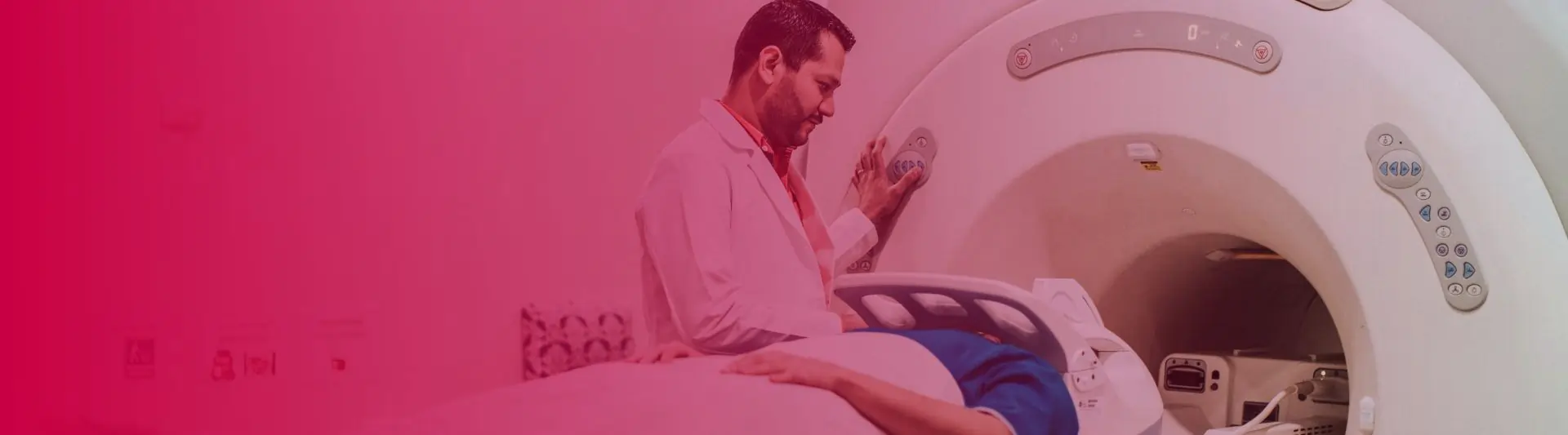
According to RadiologyInfo.org (American College of Radiology), HRCT Chest scan in Delhi and worldwide is the gold standard for diagnosing interstitial lung disease and evaluating COVID-19 pneumonia severity. The British Thoracic Society recommends HRCT Chest for suspected ILD with normal chest X-ray findings.
Table of Contents
What is HRCT Chest?
HRCT Chest stands for High-Resolution Computed Tomography of the Chest. Unlike standard CT Chest, which uses thicker image slices (5–10 mm), HRCT uses very thin slices (1–1.5 mm or less) with a high-spatial-frequency reconstruction algorithm. This produces exceptionally detailed images of lung tissue, bronchi, vessels, and interstitium — structures too fine to be resolved by standard CT.
HRCT Chest scan in Delhi can be performed as a non-contrast study (most common) or with contrast depending on the clinical question. It is typically done in full inspiration, and sometimes additional expiratory phase images are acquired to detect air trapping — a sign of small airway disease.
Quick Answer: HRCT Chest scan in Delhi is a high-resolution CT scan of the lungs using thin 1mm slices. It detects interstitial lung disease, bronchiectasis, emphysema, lung fibrosis, COVID-19 damage, and early lung nodules. The scan takes 10–15 minutes and is the gold standard for lung parenchymal assessment.
Why is HRCT Chest scan in Delhi Done?
- Interstitial Lung Disease (ILD) — Diagnosing and classifying ILD patterns: UIP, NSIP, DIP, RB-ILD, LIP
- Idiopathic Pulmonary Fibrosis (IPF) — The characteristic honeycombing and traction bronchiectasis pattern
- COVID-19 lung assessment — Quantifying ground-glass opacities, consolidation, and post-COVID fibrosis
- Bronchiectasis — Detecting and mapping abnormally dilated, thickened bronchi
- Emphysema — Quantifying and characterising centrilobular, panacinar, or paraseptal emphysema
- Sarcoidosis — Identifying bilateral hilar lymphadenopathy and parenchymal nodularity
- Hypersensitivity pneumonitis — Ground-glass opacity in upper and mid zones
- Lung nodule characterisation — Assessing shape, margins, calcification of pulmonary nodules
- Pulmonary hypertension — Secondary causes and parenchymal patterns
- Chronic cough evaluation — When chest X-ray is normal
- Autoimmune lung disease — Rheumatoid arthritis, systemic sclerosis, polymyositis lung involvement
Symptoms That Require HRCT Chest
- Progressive shortness of breath (dyspnoea) not explained by cardiac cause
- Persistent or worsening dry cough lasting more than 3–4 weeks
- Chest tightness or difficulty breathing on exertion
- Abnormal chest X-ray — bilateral lung opacities, reticulonodular shadows
- Recurrent chest infections or repeated episodes of pneumonia
- Post-COVID breathlessness and reduced exercise tolerance
- Wheezing or stridor not responsive to bronchodilators
- Known autoimmune disease (rheumatoid arthritis, scleroderma, myositis) with respiratory symptoms
- Haemoptysis (coughing blood) with normal chest X-ray
- Occupational exposure to dust, asbestos, or organic antigens with lung symptoms
Who Should Get HRCT Chest?
- Patients with clinically suspected interstitial lung disease or pulmonary fibrosis
- Post-COVID patients with persistent respiratory symptoms (long COVID)
- Patients with autoimmune diseases affecting the lungs
- Individuals with occupational lung disease risk (farmers, construction workers, textile workers)
- Patients with lung nodules detected on chest X-ray requiring characterisation
- Smokers with emphysema or chronic bronchitis symptoms
- Patients with suspected or known bronchiectasis
- Pre-surgical lung function assessment in patients with known lung disease
Preparation Before HRCT Chest
HRCT Chest scan in Delhi is typically performed without contrast, making preparation minimal:
- No fasting required — for non-contrast HRCT Chest
- Wear loose clothing — Remove jewellery, bras with underwire, and any metal objects from the chest area
- Breathing practice — The technologist will coach you to take a deep breath and hold it briefly during scanning
- Inform the team — About any breathing problems, oxygen dependency, or recent surgeries
- Inhaler users — Use your inhalers as usual before the scan
- For contrast HRCT — Fast for 4 hours and bring kidney function results
Step-by-Step Procedure for HRCT Chest
- Registration — Check in at Edge Imaging reception with your prescription
- Pre-scan briefing — Technologist explains breath-hold instructions
- Positioning — Lie flat on your back on the CT table, arms raised above the head
- Scout image — A low-dose planning image is taken first
- Inspiratory Phase — Deep breath held during main scan acquisition (8–15 seconds)
- Expiratory Phase (if ordered) — Images taken on full expiration to detect air trapping
- Prone images (if ordered) — Additional images lying face-down to exclude gravity-dependent changes
- Scan completion — Total scan time 10–15 minutes
- Image processing — Thin-slice images reconstructed using high-spatial-frequency algorithm
- Report generation — Senior radiologist provides detailed ILD or lung pathology report within 60–90 minutes
How Long Does HRCT Chest Take?
The actual scanning time for HRCT Chest scan in Delhi is 10–15 minutes. Including registration, preparation, and breath-hold practice, plan for approximately 30–45 minutes at Edge Imaging & Diagnostics, Paschim Vihar, Delhi. Reports are available within 60–90 minutes for routine cases.
Is HRCT Chest Safe?
HRCT Chest scan in Delhi is a safe procedure. It uses a slightly higher radiation dose than standard chest X-ray due to the thin-slice protocol, but modern CT scanners with dose-reduction technology keep the exposure well within safe medical limits. The effective dose is approximately 1.5–3 mSv. No contrast dye is used in most cases, eliminating allergy and kidney risks. The benefits far outweigh the risks when HRCT is clinically indicated.
Is HRCT Chest Painful? No. HRCT Chest scan in Delhi is completely painless and non-invasive. You simply lie still and hold your breath for 8–15 seconds during the scan. No needles, no injections, and no recovery time are required for a standard non-contrast HRCT Chest scan in Delhi.
Risks and Complications
- Radiation exposure — Low to moderate; justified when clinical indication exists
- Breath-hold difficulty — Patients with severe breathlessness may find the 8–15 second breath hold challenging; our technologists are trained to manage this
- Incidental findings — HRCT may detect unexpected findings requiring further evaluation
- Pregnancy — Chest CT is generally avoided in pregnancy unless critical; discuss with the radiologist
Benefits of HRCT Chest scan in Delhi
- Unmatched lung detail — 1mm thin slices reveal microscopic lung architecture
- Gold standard for ILD — Diagnoses and classifies interstitial lung disease patterns with high accuracy
- Detects early disease — Identifies lung abnormalities before they appear on chest X-ray
- Post-COVID assessment — Quantifies and characterises post-COVID lung damage
- Non-invasive — Provides biopsy-level diagnostic information without invasive procedure in many cases
- Guides treatment — ILD pattern on HRCT guides immunosuppressive and antifibrotic therapy choices
- Functional assessment — Air trapping on expiratory phase provides physiological information
Accuracy of HRCT Chest scan in Delhi
HRCT Chest has a diagnostic accuracy of 70–93% for specific ILD patterns, with UIP (Usual Interstitial Pneumonia) pattern for IPF showing accuracy up to 90% in expert hands. For COVID-19 pneumonia, HRCT sensitivity is 86–98%. For bronchiectasis, sensitivity exceeds 97%. The accuracy is directly dependent on scanner quality and radiologist expertise in interpreting complex lung patterns.
Cost of HRCT Chest in Delhi
HRCT Chest scan in Delhi cost in Delhi ranges from ₹1,500 to ₹4,500 depending on the centre and protocol complexity. At Edge Imaging & Diagnostics, Paschim Vihar, we offer high-quality HRCT Chest scan in Delhi at competitive prices with detailed radiological reports. We serve patients from Punjabi Bagh, Rajouri Garden, Janakpuri, and across Delhi NCR. Insurance accepted. For current pricing, visit edgeimaging.in.
Best Diagnostic Center for HRCT Chest in Delhi
For accurate HRCT Chest interpretation, the quality of both the CT scanner and the radiologist is paramount. Choose a centre with:
- High-resolution CT scanner capable of 1mm thin-slice imaging
- Radiologist with subspecialty training in thoracic imaging
- High-spatial-frequency reconstruction algorithm and dedicated lung window settings
- Experience in classifying ILD patterns per ATS/ERS guidelines
- Post-processing workstation for multiplanar reconstruction
Why Choose Edge Imaging & Diagnostics for HRCT Chest in Delhi?
- High-Resolution CT Scanner — 1mm thin-slice protocol delivering exquisite lung detail
- Thoracic Imaging Expertise — Our radiologists are experienced in ILD, COVID lung, and complex lung pathology reporting
- Detailed ILD Reports — Comprehensive reports include ILD pattern classification and clinical correlation
- Fast Turnaround — Reports in 60–90 minutes; emergency reports in 30 minutes
- Affordable Pricing — Competitive HRCT Chest cost with no hidden charges
- Digital Report Delivery — WhatsApp and email delivery for your convenience
- Convenient Location — Paschim Vihar, West Delhi — accessible from Punjabi Bagh, Rajouri Garden, and all of NCR
Frequently Asked Questions — HRCT Chest in Delhi
1. What is the difference between CT Chest and HRCT Chest?
Standard CT Chest uses 5–10mm slices and is suitable for mediastinal, pleural, and vascular assessment. HRCT Chest uses 1–1.5mm thin slices with a high-spatial-frequency algorithm optimised for lung parenchyma. HRCT provides far superior detail for interstitial lung disease, bronchiectasis, and emphysema.
2. Does HRCT Chest require contrast?
Most HRCT Chest scan in Delhis are performed without contrast. Contrast may be added when evaluating mediastinal masses, pulmonary vasculature (pulmonary embolism is usually done as CT Pulmonary Angiography), or suspected pleural malignancy.
3. Can HRCT Chest detect lung cancer?
HRCT Chest scan in Delhi can detect lung nodules and characterise their features (size, shape, margin, calcification). For definitive lung cancer diagnosis, biopsy is required. HRCT guides the biopsy approach and performs staging of lung cancer. For low-dose lung cancer screening in high-risk smokers, LDCT Chest is used.
4. How does HRCT differ from chest X-ray?
Chest X-ray is a 2D projection image with limited resolution. HRCT provides 3D cross-sectional images at 1mm resolution — detecting lung abnormalities that are entirely invisible on chest X-ray, such as ground-glass opacities, mild bronchiectasis, early emphysema, and miliary nodules.
5. What does the HRCT Chest report include?
At Edge Imaging & Diagnostics, our HRCT Chest reports include: lung parenchyma assessment, ILD pattern classification (UIP/NSIP/HP/DIP), air space disease, airway abnormalities (bronchiectasis, bronchial wall thickening), pleural assessment, mediastinal findings, and a summary with clinical correlation and differential diagnosis.
6. How long do I need to hold my breath during HRCT?
You need to hold your breath for 8–15 seconds during the main inspiratory scan. Our technologists will coach you beforehand. If you have severe breathlessness, inform us and we will modify the protocol to accommodate your breathing capacity.
7. Can HRCT Chest detect COVID-19 lung damage?
Yes. HRCT Chest scan in Delhi is highly sensitive for COVID-19 pneumonia (86–98% sensitivity). It shows characteristic bilateral, peripheral, lower lobe-predominant ground-glass opacities. It also assesses post-COVID fibrosis, organising pneumonia, and the degree of lung involvement — crucial for management decisions.
8. Is HRCT useful for asthma patients?
HRCT is not routinely used for simple asthma but is valuable in severe, difficult-to-control asthma to identify airway remodelling, mucus plugging, bronchiectasis, or alternative diagnoses like hypersensitivity pneumonitis that mimic asthma.
9. What does ground-glass opacity on HRCT mean?
Ground-glass opacity (GGO) appears as hazy increased density in the lung without obscuring vessels. It represents partial air-space filling or interstitial thickening. Causes include COVID-19 pneumonia, ILD, pulmonary oedema, or early infection. Clinical context determines the significance.
10. How soon will my HRCT Chest report be ready?
At Edge Imaging & Diagnostics, Paschim Vihar, Delhi, HRCT Chest reports are available within 60–90 minutes for routine cases. For urgent clinical situations, we can provide a preliminary report within 30 minutes. Final reports are delivered digitally via WhatsApp and email.
11. Can HRCT replace bronchoscopy for lung diagnosis?
HRCT can provide diagnostic pattern recognition for many ILD conditions, sometimes replacing the need for surgical lung biopsy when the pattern is classic (e.g., UIP for IPF). However, bronchoscopy and BAL provide complementary information and are needed for definitive diagnosis in many cases. HRCT and bronchoscopy are complementary tools.
12. How do I book HRCT Chest scan in Delhi at Edge Imaging in Delhi?
Book your HRCT Chest scan in Delhi at Edge Imaging & Diagnostics, Paschim Vihar, West Delhi by visiting edgeimaging.in, calling our helpline, or walking in. We offer same-day appointments for urgent respiratory cases across Punjabi Bagh, Rajouri Garden, and Delhi NCR.
Conclusion
HRCT Chest scan in Delhi is the undisputed gold standard for evaluating lung parenchyma and diagnosing a wide spectrum of respiratory diseases — from interstitial lung disease and COVID-19 damage to bronchiectasis and emphysema. Its 1mm thin-slice technology reveals lung architecture in extraordinary detail, enabling accurate diagnosis and guiding treatment in respiratory medicine.
Edge Imaging & Diagnostics in Paschim Vihar, West Delhi provides expert HRCT Chest scan in Delhi with advanced high-resolution lung CT protocols. Patients from Punjabi Bagh, Rajouri Garden, and West Delhi rely on our HRCT Chest scan in Delhi for accurate ILD, fibrosis, and COVID-19 pneumonia diagnosis at affordable cost.
For the most accurate HRCT Chest scan in Delhi, trust Edge Imaging & Diagnostics in Paschim Vihar, West Delhi. Our expert thoracic radiologists and state-of-the-art CT scanner deliver diagnostic reports of the highest quality. Visit edgeimaging.in or call us today to schedule your scan.