
 PV
PV TG
TG MN
MN EM
EM EI
EI ND
ND
 CT Scan
 PET CT
 Digital X-ray
 Ultrasound
 Amniocentesis
 Fetal Reduction
 Thermalytix Breast Screening
 Cardiology
 Lab Tests
 GAMCA Pre-Medical
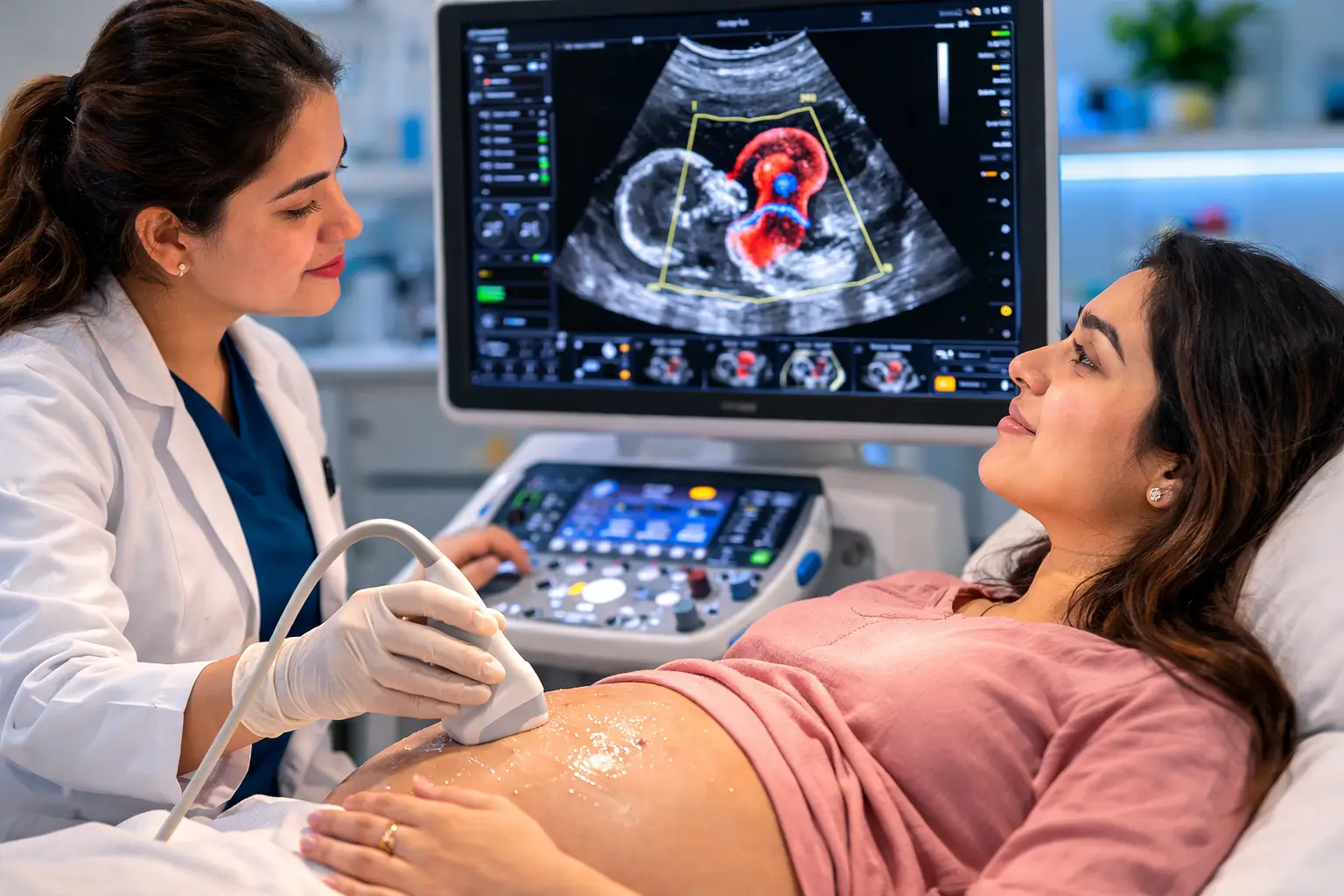
Amniocentesis in Delhi — Amniocentesis is a prenatal diagnostic test in which a small sample of amniotic fluid — the fluid surrounding the baby in the uterus — is collected for laboratory analysis. It is one of the most accurate tests available for detecting chromosomal abnormalities, genetic disorders, and certain birth defects in an unborn baby. At Edge Imaging & Diagnostics, we perform amniocentesis using real-time ultrasound guidance by our specialist fetal medicine team.
Table of Contents
What Does Amniocentesis Test For?
- Down Syndrome (Trisomy 21) — the most common chromosomal abnormality
- Edwards Syndrome (Trisomy 18) — a severe chromosomal condition
- Patau Syndrome (Trisomy 13)
- Turner Syndrome (45, X) and other sex chromosome abnormalities
- Cystic Fibrosis, Sickle Cell Disease, Thalassaemia — inherited genetic disorders
- Neural Tube Defects (spina bifida, anencephaly) via AFP measurement
- Infections — CMV, toxoplasma, rubella detected in amniotic fluid
- Fetal lung maturity assessment in late pregnancy
- Rh sensitisation monitoring in Rh incompatibility
When Is Amniocentesis Recommended?
- Maternal age ≥35 years at time of delivery (advanced maternal age)
- Abnormal first trimester combined screening (NT scan + blood tests)
- Abnormal triple test or quadruple test (serum screening markers)
- Abnormal Non-Invasive Prenatal Test (NIPT/cell-free DNA) result
- Previous child or pregnancy with chromosomal abnormality
- Family history of genetic disorder (e.g., thalassaemia carrier couple)
- Structural anomaly detected on ultrasound
- Parental balanced chromosomal rearrangement
Amniocentesis vs CVS: Which Prenatal Test to Choose?
Chorionic Villus Sampling (CVS)
Performed earlier (11–13 weeks). Samples placental tissue. Results available sooner. Slightly higher miscarriage risk (0.5–1%). Cannot test for neural tube defects.
Amniocentesis
Performed at 15–20 weeks. Samples amniotic fluid. Can detect chromosomal abnormalities AND neural tube defects. Miscarriage risk 0.1–0.3%. Results take 2–3 weeks (karyotype) or 3–5 days (FISH/QF-PCR rapid).
Which Is Better?
Both are highly accurate. CVS is chosen when earlier diagnosis is critical. Amniocentesis is preferred for comprehensive evaluation including neural tube defects, when earlier screening was delayed, or when AFP measurement is needed.
Amniocentesis Procedure at Edge Imaging
Step 1: Pre-Procedure Ultrasound
A detailed ultrasound is performed to check fetal position, placental location, amniotic fluid volume, and identify the safest puncture site away from the baby and placenta.
Step 2: Skin Preparation
Abdominal skin is cleaned with antiseptic. No general anaesthesia is required. Local anaesthetic may be used for the skin entry point.
Step 3: Needle Insertion
A thin amniocentesis needle (22-gauge) is inserted through the abdominal wall and uterus into the amniotic sac under continuous ultrasound guidance. The needle tip is always visible on ultrasound.
Step 4: Fluid Collection
15–20 ml of amniotic fluid (approximately 1 tablespoon) is collected. This is a small fraction of the total fluid and is replenished naturally within 24–48 hours.
Step 5: Lab Processing
Amniotic cells are cultured for karyotyping (full chromosomal analysis): 2–3 weeks. FISH or QF-PCR for rapid common chromosomes (13, 18, 21, X, Y): 2–5 days. AFP for neural tube defect screening: 3–5 days.
Amniocentesis Risks
- Miscarriage: The main risk. Current rates at experienced centres: 0.1–0.3% (1 in 300–1000 procedures) — lower than the 1% often quoted from older data
- Cramping: Mild period-like cramps after the procedure — normal and transient
- Spotting/light bleeding: Minor leakage at needle entry — usually resolves in 1–2 days
- Amniotic fluid leakage: Rare, usually self-limiting
- Infection (chorioamnionitis): Extremely rare (<0.1%) with proper sterile technique
- Rhesus sensitisation: Rh-negative women receive anti-D immunoglobulin after amniocentesis
Amniocentesis Cost in Delhi 2026
At Edge Imaging, Amniocentesis in Delhi with ultrasound guidance and karyotyping: ₹8,000–₹15,000 depending on tests ordered (karyotype only, FISH/QF-PCR, or comprehensive genetic panel). Rapid FISH/QF-PCR (5-day result): additional ₹3,000–₹5,000. CGHS rates available for eligible patients.
How to Prepare for Amniocentesis
- Bladder: empty or partially full depending on gestational age (your doctor will advise)
- Bring all previous ultrasound and serum screening reports
- Blood group and Rh type test should be available
- A support person is recommended for the appointment
- Wear comfortable, two-piece clothing
- No special fasting required
- Stop blood thinners if advised by your doctor
After Amniocentesis: What to Do
- Rest at home for 24 hours after the procedure
- Avoid heavy lifting, vigorous exercise, and sexual intercourse for 48 hours
- Mild cramping is normal — paracetamol is safe if needed
- Call immediately if: heavy bleeding, significant fluid leakage, fever, or severe pain
- Resume normal light activity the following day
- Karyotype results: 2–3 weeks. Rapid FISH: 2–5 days
Frequently Asked Questions for Amniocentesis in Delhi
Q1. Is amniocentesis mandatory?
Amniocentesis in Delhi is completely voluntary. It is offered (not mandatory) to women with increased risk of chromosomal abnormalities based on age, family history, or screening test results. Informed consent is obtained before the procedure.
Q2. How accurate is amniocentesis for Down syndrome?
Amniocentesis in Delhi is >99% accurate for detecting chromosomal abnormalities including Down syndrome. It is the gold standard diagnostic test — far more accurate than screening tests (NT scan, triple test) which only assess probability.
Q3. Is amniocentesis painful?
Most women describe mild discomfort — like a period cramp or pressure sensation as the needle enters. The procedure takes approximately 5–10 minutes for the aspiration itself.
Q4. When should amniocentesis be done?
The optimal window for diagnostic amniocentesis is 15–20 weeks of pregnancy. It can be performed after 15 weeks when there is adequate amniotic fluid for safe sampling.
Q5. What if amniocentesis shows Down syndrome?
A positive result will be discussed compassionately by the fetal medicine specialist, who will explain the diagnosis, its implications, and all available options including continuation of pregnancy with support planning or termination if legally and personally appropriate.
Q6. Can amniocentesis cause a miscarriage?
The risk is real but very low at experienced centres — approximately 0.1–0.3% (1 in 300–1000 procedures). This must be balanced against the diagnostic benefit for high-risk pregnancies.
Q7. How long do amniocentesis results take?
Rapid FISH/QF-PCR (for chromosomes 13, 18, 21, X, Y): 2–5 days. Full karyotype: 2–3 weeks. Microarray (detailed genetic analysis): 3–4 weeks.
Q8. Where can I get amniocentesis in West Delhi?
Edge Imaging & Diagnostics offers Amniocentesis in Delhi by an experienced fetal medicine specialist using real-time ultrasound guidance. Our centres in Tagore Garden and Paschim Vihar handle high-risk pregnancies with compassionate, expert care.
Book Amniocentesis at Edge Imaging Delhi
Concerned about chromosomal abnormalities in your pregnancy? Our fetal medicine specialists at Edge Imaging perform amniocentesis with precision, compassion, and complete confidentiality. Early answers help you plan with confidence.
📍 Locations: Tagore Garden | Paschim Vihar | Moti Nagar | New Multan Nagar
✅ NABH Accredited | CGHS & DGHS Empanelled | Same-Day Reporting
📞 Call or WhatsApp to book your appointment today.
For more information, explore our related guide: Fetal Echo Test in Delhi
For more information on this procedure, refer to the World Health Organization (WHO) guidelines on medical procedures.
Medical Disclaimer: This article is for educational purposes only. Always consult a qualified medical professional for diagnosis and treatment advice.