
 PV
PV TG
TG MN
MN EM
EM EI
EI ND
ND
 CT Scan
 PET CT
 Digital X-ray
 Ultrasound
 Amniocentesis
 Fetal Reduction
 Thermalytix Breast Screening
 Cardiology
 Lab Tests
 GAMCA Pre-Medical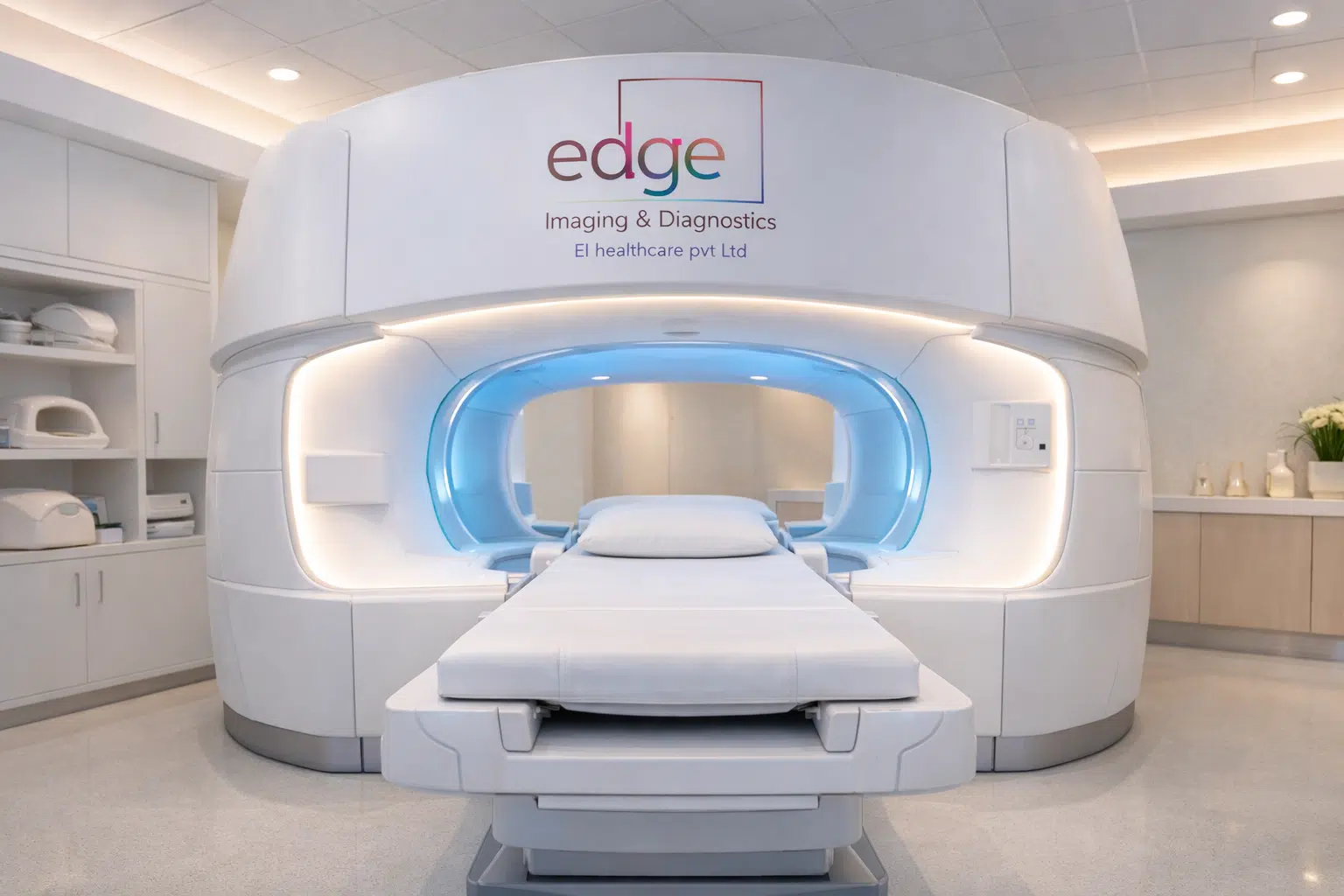

MRI Scan: Meaning, Procedure, Types, Cost, and Benefits
MRI stands for Magnetic Resonance Imaging. It uses a strong magnet and radio waves — not X-rays and no radiation at all — to build detailed pictures of the soft tissue inside your body: the brain, spinal cord, discs, ligaments, muscles and internal organs.
Magnetic Resonance Imaging (MRI) scan is one of the most advanced medical imaging techniques used today. It provides highly detailed images of organs, tissues, and bones without using harmful radiation. Whether it’s for diagnosing brain disorders, spinal problems, or internal organ conditions, an MRI scan in Delhi plays a crucial role in modern healthcare.
History and Development of MRI
MRI was developed in the 1970s and has since become one of the most widely used diagnostic tools. The pioneers of MRI technology were even awarded the Nobel Prize in Medicine for its contribution to healthcare. Over the decades, MRI machines have evolved into faster, more accurate, and more patient-friendly systems.
How Does an MRI Scan Work?
An MRI scan works in the following steps:
-
Magnetic Field – Strong magnets align hydrogen atoms in the body.
-
Radiofrequency Pulses – Radio waves disturb this alignment.
-
Signal Detection – The scanner detects signals released when atoms return to normal.
-
Computer Processing – A computer converts signals into clear images of soft tissues, organs, and bones.
👉 In simple words: MRI acts like a “camera” for your body’s internal structures, especially soft tissues that X-rays cannot capture clearly.
Types of MRI Scans
Based on Body Area
-
Brain MRI – Detects tumors, stroke, MS, and brain injuries.
-
Spine MRI – Checks slipped discs, spinal cord injuries.
-
Knee & Joint MRI – For sports injuries and arthritis.
-
Cardiac MRI – Assesses heart diseases.
-
Abdomen MRI – Detects liver, kidney, pancreas, or stomach disorders.
Based on Technique
-
Functional MRI (fMRI) – Measures brain activity.
-
Magnetic Resonance Angiography (MRA) – Focuses on blood vessels.
-
Diffusion MRI – Studies movement of water molecules in tissues.
-
Contrast MRI – Uses a contrast dye to highlight abnormalities.
Open vs Closed MRI
-
Closed MRI – Traditional tube-shaped machines (high accuracy).
-
Open MRI – Wider, open design (better for claustrophobic patients).
Why is an MRI Scan Done
Doctors recommend an MRI scan to:
-
Detect brain tumors, stroke, epilepsy, and multiple sclerosis.
-
Diagnose spinal cord injuries and back pain causes.
-
Check ligament and cartilage injuries in joints.
-
Detect heart diseases, blocked vessels, and valve disorders.
-
Diagnose abdominal issues (kidney, liver, pancreas, uterus, prostate).
-
Detect and monitor cancers.
MRI vs CT Scan vs X-Ray
| Feature | MRI Scan | CT Scan | X-Ray |
|---|---|---|---|
| Radiation | No | Yes | Yes |
| Image Quality | High for soft tissues | Good for bones & internal bleeding | Good for bones |
| Best Use | Brain, spine, joints, organs | Trauma, internal bleeding, lungs | Bone fractures |
| Cost | Higher | Moderate | Low |
MRI Scan Procedure – What to Expect
-
Before the Scan: Remove all metal objects, wear hospital gown, may need to fast (if contrast used).
-
During the Scan: Lie still on a table that slides into the machine. The scan usually lasts 30–60 minutes. The machine makes loud knocking sounds (earplugs/headphones are provided).
-
After the Scan: You can go home immediately. If contrast dye was used, drink water to flush it out.
Benefits of MRI Scan
1. No Radiation Exposure
Unlike X-rays or CT scans, MRI does not use harmful ionizing radiation. This makes it a safer option, especially for children, pregnant women (without contrast), and patients requiring repeated scans. Safe for repeated use.
2. Highly Detailed Images
MRI provides clear and detailed images of soft tissues, organs, and blood vessels, which are often not visible in X-rays. This helps in detecting diseases at an early stage.
3. Better for Brain, Spine & Joint Disorders
MRI is particularly effective in diagnosing conditions like:
-
Brain tumors, stroke, epilepsy, multiple sclerosis
-
Spinal cord injuries, disc problems, back pain causes
-
Ligament and cartilage injuries in knees and joints
4. Early Detection of Cancer
Helps in early disease detection. MRI can detect and monitor tumors and cancers with high accuracy, allowing doctors to diagnose diseases earlier and plan effective treatment.
5. Safe for Long-Term Monitoring
Since there is no radiation, patients with chronic conditions (like multiple sclerosis, tumors, or spinal disorders) can undergo multiple MRI scans safely over time.
6. Functional and Vascular Imaging
Advanced MRI techniques like fMRI (functional MRI) and MRA (Magnetic Resonance Angiography) allow doctors to study brain activity and blood vessel conditions without invasive procedures.
7. Helps in Personalized Treatment
MRI provides precise details (Highly detailed images of soft tissues and organs) that assist doctors in creating personalized treatment plans, whether it’s surgery, therapy, or long-term disease management.
Risks and Limitations of MRI Scan
While an MRI scan is generally safe and widely used, there are certain risks and limitations that patients should be aware of before undergoing the procedure.
1. Not Suitable for Patients with Metal Implants
-
MRI uses strong magnets, so it is not recommended for people with pacemakers, cochlear implants, metallic heart valves, or certain surgical clips.
-
Even small metallic fragments (like in the eyes or skin) can interfere with the scan or cause injury.
2. Claustrophobia and Discomfort
-
Traditional closed MRI machines can make some patients feel trapped or anxious.
-
Patients with severe claustrophobia may require sedation or an open MRI alternative.
3. Noise and Long Duration
-
The scanner makes loud knocking sounds, which can be uncomfortable despite ear protection.
-
MRI scans usually take 30–60 minutes, which requires the patient to stay still for accurate results.
4. Contrast Dye Side Effects
-
Some MRI scans use gadolinium-based contrast dye to enhance image clarity.
-
Though rare, side effects like allergic reactions, nausea, or headaches may occur.
-
Patients with kidney problems may be at risk of a serious condition called Nephrogenic Systemic Fibrosis (NSF).
5. Not Always Available Everywhere
-
MRI machines are expensive and not available in smaller hospitals or rural areas.
-
This may lead to higher waiting times and limited access.
6. Higher Cost Compared to Other Scans
-
MRI scans are costlier than X-rays or CT scans, making them less affordable for some patients.
-
Insurance may cover the cost only if prescribed by a doctor.
7. Limitations in Imaging Certain Structures
-
While MRI is excellent for soft tissues, it may not always be the best option for lung diseases, bone fractures, or acute bleeding, where CT or X-ray might be more suitable.
MRI Scan Cost in India
The MRI scan cost in India varies depending on the body part, type of scan, and location:
-
Basic MRI: ₹3,000 – ₹8,000
-
MRI with Contrast: ₹5,000 – ₹12,000
-
Specialized Scans (Brain, Spine, Whole Body): ₹10,000 – ₹25,000
👉 Many health insurance plans cover MRI scans if prescribed by a doctor.
What it costs at Edge Imaging
The figures above are the range across India, not our rate. Our own published price list, scan by scan, is on the MRI scan cost in Delhi page.
For the exact rate for the scan on your prescription, send us a photo of it on WhatsApp and we will reply with today’s price and the earliest slot.
Latest Advances in MRI Technology
-
3 Tesla & 7 Tesla MRI – Ultra-high resolution imaging.
-
AI-assisted MRI – Faster and more accurate diagnosis.
-
Portable MRI machines – Useful in emergencies.
-
Silent MRI – Reduced machine noise for patient comfort.
MRI scan — common questions
What does MRI mean?
MRI stands for Magnetic Resonance Imaging. It is a scan that uses a strong magnetic field and radio waves — not X-rays — to produce detailed images of the soft tissue inside the body, including the brain, spinal cord, discs, ligaments, muscles and internal organs.
Is an MRI scan dangerous or bad for you?
An MRI involves no ionising radiation at all, which is why it can be repeated safely over years. The real risks are different ones: the strong magnet makes it unsafe for people with pacemakers, cochlear implants, some metallic heart valves or surgical clips, and gadolinium contrast needs care in anyone with kidney problems. Tell the centre about any implant, surgery or kidney condition before you book.
How long does an MRI scan take?
Usually 30 to 60 minutes, depending on the body part and whether contrast is used. You need to lie still for that time, which is the part most people find hardest.
Do I need to fast before an MRI?
Not for a plain MRI. Fasting is usually asked for only when contrast dye is going to be used, or for certain abdominal studies. Your prescription and the centre will tell you which applies.
What is the difference between an open MRI and a closed MRI?
A closed MRI is the traditional tube-shaped machine and gives very high accuracy. An open MRI has a wider, open design, which is far easier for patients who are claustrophobic, elderly, of larger build, or unable to lie in a narrow tunnel.
Can I have an MRI if I am claustrophobic?
Yes. An open MRI removes the enclosed feeling for most people, and where that is not enough, sedation can be arranged through your doctor. Tell us when you book so the right machine and slot are kept for you.
Which is better, MRI or CT scan?
Neither is better in general — they answer different questions. MRI is superior for soft tissue: brain, spinal cord, discs, ligaments and organs, with no radiation. CT is faster and better for trauma, acute bleeding, lungs and bone detail. Your doctor picks the one that answers the clinical question.
How much does an MRI scan cost?
Across India a basic MRI is generally ₹3,000 to ₹8,000, an MRI with contrast ₹5,000 to ₹12,000, and specialised scans ₹10,000 to ₹25,000. Those are national ranges, not our rate — our own published price list is on the MRI scan cost in Delhi page, and you can get today’s exact rate by sending your prescription to 9555999960 on WhatsApp.
An MRI scan is one of the safest and most accurate diagnostic tools in modern medicine. From brain and spine disorders to joint and abdominal issues, MRI helps doctors detect problems early and plan effective treatment.
👉 If your doctor recommends an MRI scan, don’t delay it. Early diagnosis can make a big difference in successful treatment and recovery.
Holding an MRI prescription? Send us a photo on WhatsApp and we will confirm today’s price, tell you whether you need contrast or fasting, and keep a slot ready.