
Liver Abscess in Delhi — A liver abscess is a collection of pus (infected fluid) within the liver tissue. It is a serious medical condition that requires prompt diagnosis and treatment. While the word ‘abscess’ may sound alarming, modern minimally invasive drainage techniques mean that most liver abscesses can be treated effectively without major surgery — often on an outpatient basis.
Table of Contents
What Causes a Liver Abscess?
1. Amoebic Liver Abscess (Most Common in India)
Caused by Entamoeba histolytica, a microscopic parasite spread through contaminated food and water. The parasite travels from the intestine to the liver through the portal vein. Amoebic liver abscess accounts for 80–90% of all liver abscesses in India and South Asia. More common in men aged 20–50 years.
2. Pyogenic Liver Abscess
Caused by bacteria — most commonly Klebsiella pneumoniae, Escherichia coli, or Streptococcus species. Often secondary to intra-abdominal infections (appendicitis, cholecystitis, diverticulitis) or via the biliary tract. More common in diabetic patients and the elderly.
3. Fungal Liver Abscess
Rare. Occurs in severely immunocompromised patients (post-chemotherapy, HIV/AIDS, organ transplant recipients). Caused by Candida species.
Symptoms of Liver Abscess
- High-grade fever (often >38.5°C or 101°F) — the most common symptom
- Right upper abdominal pain — dull, constant ache in the liver region
- Tenderness over the liver when pressed
- Nausea and vomiting
- Significant loss of appetite
- Weight loss over weeks
- Night sweats and chills
- Jaundice (yellow skin/eyes) in severe cases
- Hiccups (diaphragmatic irritation from adjacent abscess)
- Right shoulder pain (referred pain from diaphragmatic irritation)
- General weakness and fatigue
How Is Liver Abscess Diagnosed?
Blood Tests
Elevated WBC (leukocytosis), elevated CRP and ESR, raised liver enzymes (ALT, AST, ALP), low albumin. Serology for Entamoeba histolytica antibodies (positive in >95% of amoebic cases).
Ultrasound Abdomen
The first-line imaging test. Ultrasound shows the size, location, and internal character of the abscess (solid vs cystic vs complex). Available immediately and without radiation. At Edge Imaging, expert ultrasound reporting is available same-day.
CT Scan Abdomen
CT provides detailed information about the abscess wall, surrounding liver, bile ducts, portal vein, and detects complications (rupture, spread). Essential for planning drainage. Edge Imaging’s 128-slice CT delivers crystal-clear images within minutes.
Diagnostic Aspiration
Sometimes the pus is aspirated and sent for gram stain, culture, and sensitivity to identify the causative organism and determine antibiotic choice.
Treatment of Liver Abscess
1. Antibiotics
All liver abscesses require antibiotics. Amoebic abscesses: metronidazole is highly effective. Pyogenic abscesses: broad-spectrum antibiotics covering gram-negative bacteria and anaerobes (e.g., piperacillin-tazobactam + metronidazole). Antibiotics alone are sufficient for small (<5 cm) uncomplicated amoebic abscesses.
2. Ultrasound-Guided Drainage (Aspiration or Catheter)
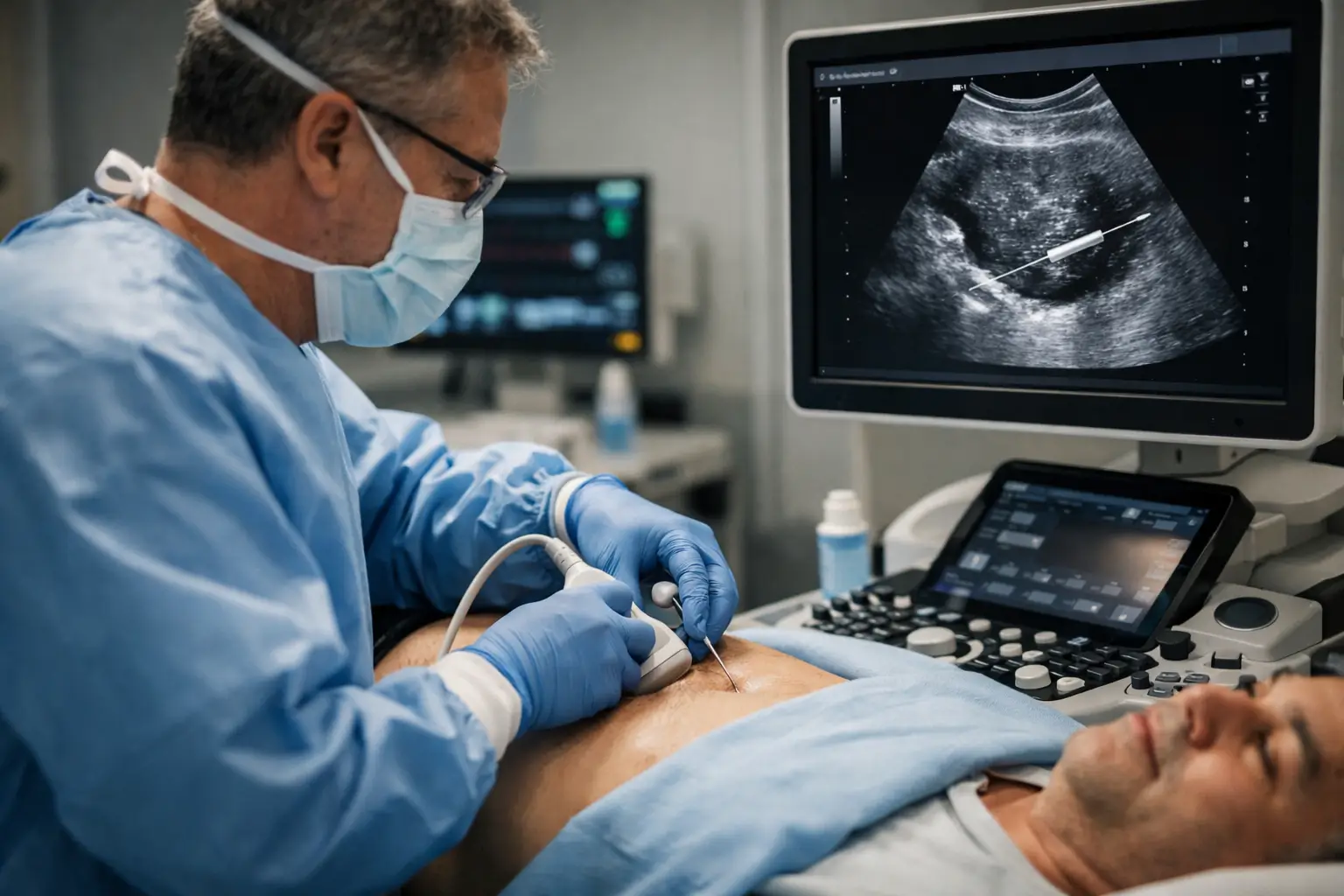
For larger abscesses (>5 cm), or those not responding to antibiotics, ultrasound-guided drainage is the treatment of choice. A needle is inserted into the abscess cavity under ultrasound guidance to drain the pus. This is done at Edge Imaging as a minimally invasive, image-guided interventional procedure.
3. Pigtail Catheter Drainage
For very large abscesses or those with thick pus, a pigtail catheter (flexible tube) is placed to allow continuous drainage over several days. Edge Imaging’s interventional radiology team places pigtail catheters as a standard procedure.
4. Surgical Drainage
Required in <10% of cases — when the abscess is inaccessible by needle, has ruptured into the peritoneum, or involves multiple loculated collections not amenable to percutaneous drainage.
Liver Abscess: Key Risk Factors
- Diabetes mellitus — severely increases susceptibility to pyogenic abscess
- Poor sanitation and contaminated water (amoebic)
- Recent abdominal surgery or trauma
- Biliary tract disease (gallstones, cholangitis)
- Immunosuppression (steroid use, chemotherapy, HIV)
- Alcoholism
- Recent travel to developing countries
Complications of Untreated Liver Abscess
- Rupture into the peritoneal cavity — causing peritonitis (medical emergency)
- Rupture into the pleural space — causing empyema
- Septicaemia — life-threatening blood infection
- Amoebiasis spread to brain or lung (rare)
- Liver failure in severe cases
Frequently Asked Questions for Liver Abscess in Delhi
Q1. Can a liver abscess be cured without surgery?
Yes — the vast majority of liver abscesses (>90%) are treated successfully without surgery using antibiotics plus ultrasound-guided drainage. Surgery is reserved for the minority of cases not responding to these approaches.
Q2. How serious is a liver abscess?
Without treatment, a liver abscess can be life-threatening due to rupture and sepsis. With prompt diagnosis and appropriate treatment (antibiotics + drainage), the prognosis is excellent — cure rates exceed 90%.
Q3. How do I know if my fever is from a liver abscess?
Persistent high fever with right upper abdominal pain, tenderness, and general malaise should prompt immediate medical evaluation. An ultrasound of the abdomen can diagnose or rule out liver abscess within minutes.
Q4. How long does treatment for liver abscess take?
Antibiotics are typically continued for 4–6 weeks (oral metronidazole for amoebic, oral antibiotics for pyogenic after initial IV treatment). Drainage usually resolves the abscess within 1–3 weeks of catheter placement.
Q5. Can liver abscess come back?
Recurrence is uncommon (<5%) with complete treatment. The risk is higher in patients who did not complete their antibiotic course or have ongoing risk factors like uncontrolled diabetes or biliary disease.
Q6. Does a liver abscess show on ultrasound?
Yes — for diagnosing Liver Abscess in Delhi, ultrasound has sensitivity of 85–95%. CT scan has sensitivity approaching 98–99% and is used for comprehensive evaluation and drainage planning.
Q7. Where can I get liver abscess drainage in Delhi?
Edge Imaging & Diagnostics in West Delhi offers expert diagnosis and treatment of Liver Abscess in Delhi by experienced interventional radiologists. Same-day or next-day appointments available.
Q8. Is liver abscess drainage painful?
Local anaesthesia is used for all drainage procedures, making them comfortable. You may feel pressure during the procedure. Post-procedure, mild soreness for 1–2 days is normal and managed with oral pain relief.
Liver Abscess Diagnosis & Drainage at Edge Imaging Delhi
Fever, right-sided abdominal pain, and fatigue? These could be signs of Liver Abscess in Delhi. Edge Imaging offers same-day ultrasound diagnosis and expert minimally invasive liver abscess drainage — restoring your health without major surgery.
📍 Locations: Tagore Garden | Paschim Vihar | Moti Nagar | New Multan Nagar
✅ NABH Accredited | CGHS & DGHS Empanelled | Same-Day Reporting
📞 Call or WhatsApp to book your appointment today.
For more information, explore our related guide: Biopsy Test in Delhi
For more information on this procedure, refer to the World Health Organization (WHO) guidelines on medical procedures.
Medical Disclaimer: This article is for educational purposes only. Always consult a qualified medical professional for diagnosis and treatment advice.