
Venography Both Lower Limbs in Delhi scan in Delhi — CT Venography of the lower limbs — is a specialised imaging investigation that evaluates the veins of the legs from the foot veins up to the inferior vena cava. It is the most comprehensive non-invasive tool for diagnosing deep vein thrombosis (DVT) and other venous pathologies. If your doctor has advised lower limb venography, this detailed guide covers everything you need to know — procedure, preparation, risks, cost, and the best centre in Delhi.

According to RadiologyInfo.org (American College of Radiology), Venography Both Lower Limbs in Delhi and worldwide is an established imaging modality for diagnosing deep vein thrombosis (DVT) and mapping the venous system. The National Heart, Lung, and Blood Institute (NHLBI) recognises venography as the gold standard reference test for DVT diagnosis.
Table of Contents
Table of Contents
- What is Venography Both Lower Limbs in Delhi?
- Why is This Scan Done?
- Symptoms That Require This Scan
- Who Should Get This Scan?
- Preparation Before the Scan
- Step-by-Step Procedure
- How Long Does the Scan Take?
- Is the Scan Safe?
- Risks and Complications
- Benefits of the Scan
- Accuracy of the Scan
- Cost in Delhi
- Best Diagnostic Center in Delhi
- Why Choose Edge Imaging
- Frequently Asked Questions
- Conclusion
What is Venography Both Lower Limbs in Delhi?
Lower limb CT Venography is a contrast-enhanced CT examination specifically designed to image the venous system of both legs. After IV contrast injection, images are acquired during the venous phase to visualise the deep and superficial veins of the lower extremities — including the popliteal, femoral, iliac veins, and inferior vena cava (IVC).
Conventional venography — injecting contrast directly into foot veins under X-ray guidance — has largely been replaced by CT Venography, which is less invasive, provides bilateral assessment in a single study, and evaluates the entire venous system from the calf to the IVC.
CT Venography is often performed as part of a CT Pulmonary Angiography + CT Venography (CTPA + CTV) combination study — a single examination that simultaneously evaluates pulmonary embolism (PE) and the deep vein thrombosis source.
Quick Answer: Venography Both Lower Limbs in Delhi (CT Venography) is a contrast CT scan that images the veins of both legs from the feet to the inferior vena cava. It is the comprehensive investigation for DVT diagnosis, chronic venous disease, and pre-surgical venous mapping. The scan takes 20–30 minutes.
Why is Venography Both Lower Limbs in Delhi Done?
- Deep Vein Thrombosis (DVT) — Detecting thrombus (clot) in the deep veins of the calf, thigh, or iliac veins
- Pulmonary Embolism workup — Identifying the DVT source when PE is diagnosed
- Chronic venous insufficiency — Assessing venous valve incompetence and reflux in varicose vein disease
- May-Thurner Syndrome — Left iliac vein compression by the right iliac artery causing left leg DVT
- Venous stenting follow-up — Post-procedural assessment of iliac or femoral venous stents
- Pre-varicose vein surgery — Mapping superficial and deep venous anatomy
- IVC filter assessment — Evaluating IVC filter position and thrombus
- Venous malformations — Congenital or acquired venous anomalies
- Leg swelling with suspected venous cause — Differentiating DVT from other causes of leg oedema
Symptoms That Require Venography Both Lower Limbs in Delhi
- Unilateral leg swelling — a classic DVT symptom
- Leg pain, tenderness, or warmth — especially in the calf or thigh
- Redness or skin discolouration over a leg vein
- Pitting oedema of one or both legs without cardiac or renal cause
- Varicose veins with pain or skin complications
- Skin ulcers over the inner ankle (venous stasis ulcers)
- Suspected pulmonary embolism with leg DVT source investigation
- Post-surgical leg swelling (particularly after orthopaedic or pelvic surgery)
- Long-haul travel or prolonged immobilisation with leg symptoms
Who Should Get Venography Both Lower Limbs in Delhi?
- Patients with clinically suspected DVT where ultrasound is inconclusive
- Patients with DVT involving the iliac veins (poorly visualised on ultrasound)
- Patients with May-Thurner syndrome or suspected iliac vein compression
- Pre-surgical patients requiring venous anatomy mapping
- Patients with recurrent DVT needing comprehensive venous assessment
- Patients with chronic venous insufficiency and skin ulceration
- Post-PE patients for assessment of DVT extent and residual thrombus
Preparation Before Venography Both Lower Limbs in Delhi
- Fasting — Fast for 4–6 hours before the scan
- Kidney function test — Serum creatinine required before IV contrast injection
- Anticoagulation status — Inform the team if you are on anticoagulants (heparin, warfarin, DOACs)
- Inform about allergies — Contrast allergy, kidney disease, or diabetes
- Metformin — Stop 48 hours before (diabetic patients; consult your doctor)
- Compression stockings — Remove stockings before the scan
- Arrive early — 30 minutes before appointment for IV cannula placement
Step-by-Step Procedure for Venography Both Lower Limbs in Delhi
- Registration — Present prescription and creatinine report at Edge Imaging, Paschim Vihar
- IV Cannula Placement — IV access in the antecubital vein (elbow)
- Positioning — Lie flat on your back on the CT table, legs straight and together
- IV Contrast Injection — Iodinated contrast injected via power injector
- Venous Phase Timing — Scan acquired 180–240 seconds after injection (venous phase when contrast fills the leg veins)
- CT Acquisition — Scan from both feet to the diaphragm covering the entire lower limb venous system and IVC
- Multiplanar Reconstruction — Axial, coronal, and sagittal views of the venous system
- 3D Venous Mapping — Volume rendered 3D images of the venous anatomy
- Post-scan monitoring — 15–30 minutes observation after contrast
- Report delivery — Detailed report describing thrombus location, extent, and venous anatomy within 60 minutes
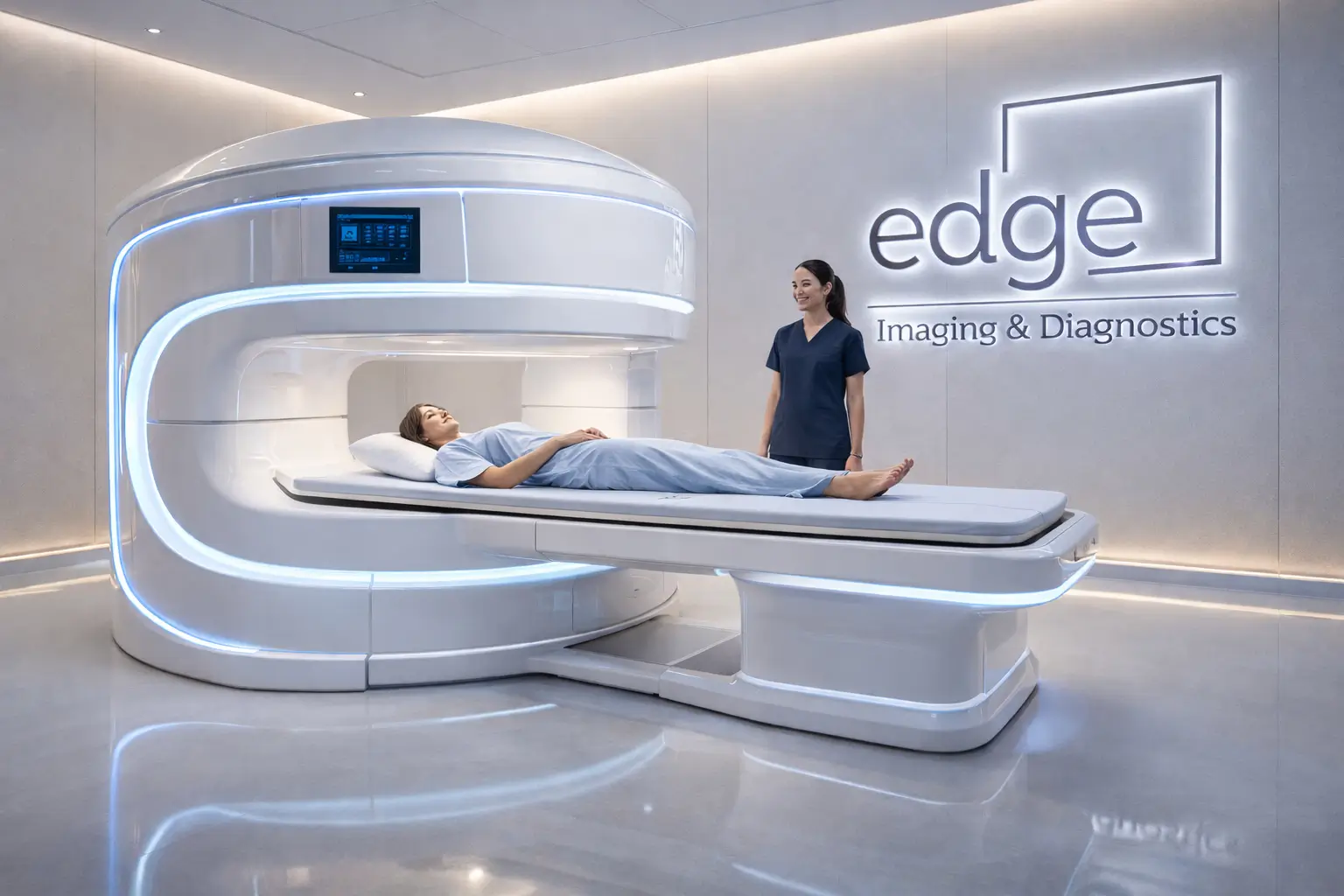
How Long Does Venography Both Lower Limbs in Delhi Take?
The CT scanning takes 20–30 minutes including the waiting time for contrast to reach the venous phase. Total visit time at Edge Imaging & Diagnostics, Paschim Vihar, Delhi including preparation, scanning, and post-scan monitoring is approximately 60–90 minutes. Reports are available within 60 minutes.
Is Venography Both Lower Limbs in Delhi Safe?
CT Venography is considerably safer than conventional invasive venography — there is no direct contrast injection into foot veins and no fluoroscopy-guided procedure required. The main risks are IV contrast allergy and contrast nephropathy, which are minimised by pre-scan kidney function testing and proper patient assessment. At Edge Imaging, we use iso-osmolar contrast agents and maintain complete emergency protocols.
Is Venography Lower Limbs Painful? CT Venography of the lower limbs is not painful. The IV cannula insertion is a brief pinch. You may feel warmth and flushing when contrast is injected. No foot vein injections or tourniquets are required. The CT scanning is completely painless and non-invasive.
Risks and Complications
- Contrast allergy — Rare; emergency protocols in place at Edge Imaging
- Contrast nephropathy — Minimised by creatinine testing and adequate hydration
- Radiation — Moderate dose; extends from feet to diaphragm; clinically justified for complete venous assessment
Benefits of Venography Both Lower Limbs in Delhi
- Bilateral simultaneous assessment — Both legs and IVC evaluated in one study
- Detects iliac DVT — Iliac veins poorly visualised on ultrasound; CT excels here
- Less invasive than conventional venography — No foot vein puncture required
- Identifies complications — IVC thrombus, venous malformations, May-Thurner anatomy
- Can be combined with CTPA — Single examination for PE + DVT simultaneously
- Guides treatment — Thrombus extent determines anticoagulation duration and catheter-directed therapy candidacy
Accuracy of Venography Both Lower Limbs in Delhi
CT Venography has sensitivity of 90–100% for proximal DVT (iliac, femoral, popliteal veins) and 71–93% for calf DVT. For iliac vein DVT — where ultrasound has limited sensitivity (~60%) — CT Venography is far superior. Duplex ultrasound remains the first-line investigation for femoropopliteal DVT due to its non-radiation advantage and wide availability.
Cost of Venography Both Lower Limbs in Delhi
Venography Both Lower Limbs in Delhi scan cost in Delhi ranges from ₹3,000 to ₹8,000. At Edge Imaging & Diagnostics, Paschim Vihar, West Delhi, we offer comprehensive CT Venography of both lower limbs with complete venous mapping and expert vascular radiology reporting at competitive rates. Insurance accepted. For current pricing, visit edgeimaging.in.
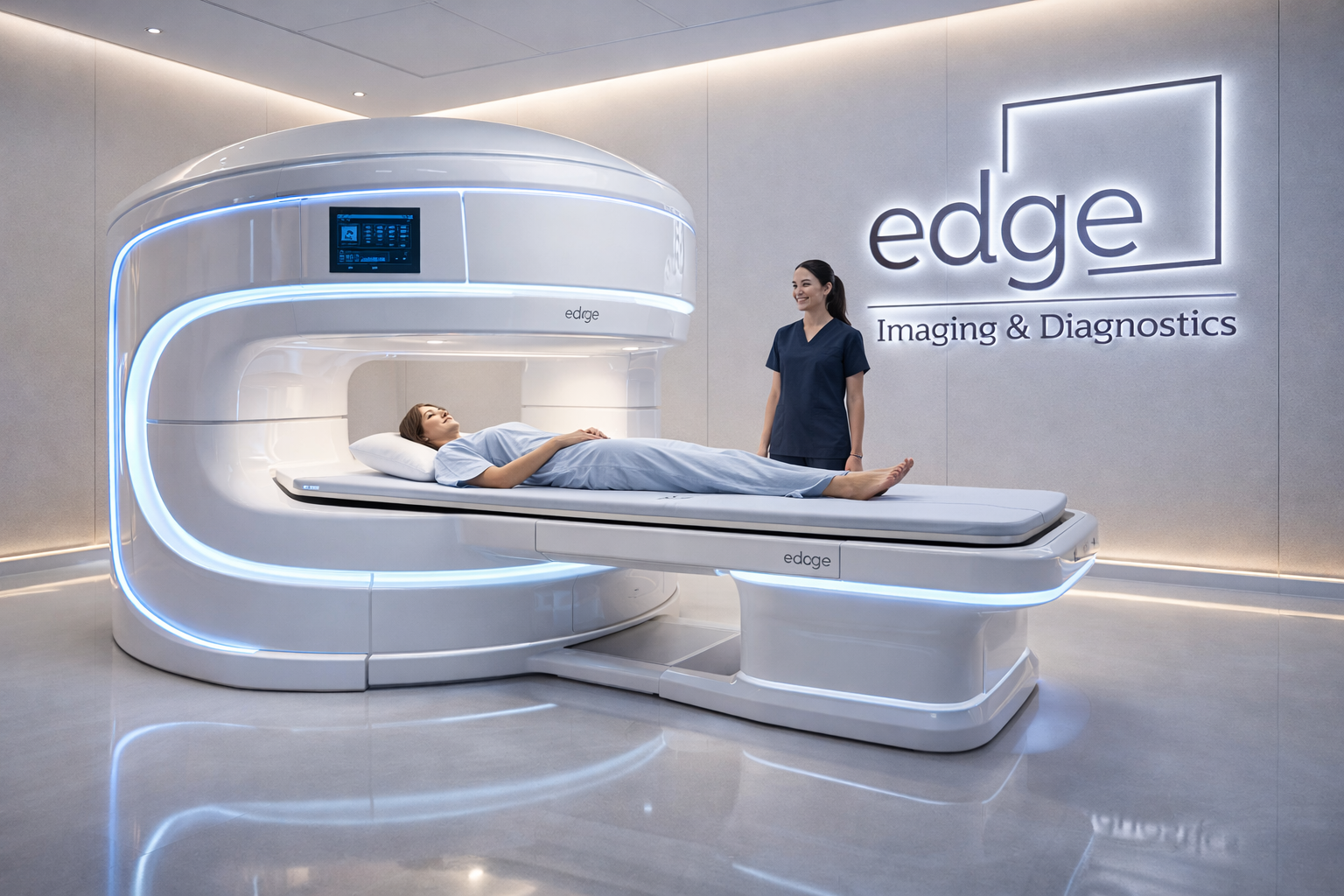
Best Diagnostic Center for Venography Both Lower Limbs in Delhi
- Advanced multi-detector CT for bilateral lower limb venous coverage
- Radiologist with vascular radiology subspecialty training
- 3D venous mapping capability with volume rendering
- On-site creatinine testing and emergency facilities
- Experience in combining with CTPA for PE + DVT simultaneous workup
Why Choose Edge Imaging & Diagnostics for Venography Both Lower Limbs in Delhi?
- Complete Bilateral Venous Coverage — Both legs and IVC from feet to diaphragm in one examination
- Expert Vascular Radiologists — Experienced in DVT, May-Thurner, and venous malformation reporting
- 3D Venous Mapping — Volume rendered vascular maps for vascular surgeons
- Can Combine with CTPA — PE + DVT simultaneous assessment available
- Safety Protocols — Mandatory creatinine testing and emergency facilities
- Fast Reports — Within 60 minutes; urgent same-day reporting available
- Convenient Location — Paschim Vihar, West Delhi; serving Punjabi Bagh, Rajouri Garden, and NCR
Frequently Asked Questions — Venography Both Lower Limbs in Delhi
1. What is the difference between CT Venography and Duplex Ultrasound for DVT?
Duplex ultrasound is the first-line investigation for DVT — no radiation, widely available, and highly accurate for femoropopliteal DVT. CT Venography is superior for iliac vein DVT (poorly seen on ultrasound), provides bilateral assessment simultaneously, and can be combined with CTPA. CT is used when ultrasound is inconclusive or when iliac/IVC assessment is needed.
2. Is conventional venography still performed?
Conventional ascending venography (injecting contrast into foot veins under X-ray) has been largely replaced by CT Venography and duplex ultrasound. It is still occasionally used for specific indications such as pre-venous intervention planning when CT is inconclusive, but is now rarely the first-line investigation.
3. Can CT Venography detect blood clots in the IVC?
Yes. CT Venography provides excellent visualisation of the inferior vena cava (IVC) — detecting IVC thrombus, IVC filter position and patency, and iliocaval DVT extent. Ultrasound has poor sensitivity for IVC thrombus, making CT Venography the investigation of choice when IVC involvement is suspected.
4. What is May-Thurner Syndrome and how is CT helpful?
May-Thurner Syndrome (Iliac Vein Compression Syndrome) occurs when the right iliac artery compresses the left common iliac vein, causing left leg DVT predominantly in young women. CT Venography is the investigation of choice for diagnosing May-Thurner — showing the compression anatomy, left iliac vein stenosis, and extent of DVT.
5. Can I be anticoagulated before CT Venography?
Yes. Being on anticoagulant therapy (heparin, warfarin, DOACs) does not prevent CT Venography. Inform the team about your anticoagulation status. CT Venography can show residual thrombus or thrombus resolution even in patients receiving treatment.
6. Can CT Venography be combined with lung CT for PE?
Yes. CTPA (CT Pulmonary Angiography) + CTV (CT Venography) is a combined study performed in a single visit. After the CTPA is completed, a delayed CT of the legs is acquired in the venous phase — simultaneously diagnosing pulmonary embolism and identifying the DVT source. This combined study increases overall PE + DVT diagnostic yield.
7. How long do I wait between contrast injection and venous imaging?
The venous phase for lower limb CT Venography is acquired approximately 180–240 seconds (3–4 minutes) after IV contrast injection. This delay allows contrast to fill the deep venous system adequately. You will simply lie still on the CT table during this waiting period.
8. Is CT Venography safe during pregnancy?
Duplex ultrasound is the first-line investigation for DVT in pregnancy due to its zero radiation exposure. CT Venography involves significant pelvic radiation exposure and is generally avoided in pregnancy unless absolutely necessary. MR Venography (without gadolinium) or clinical assessment with anticoagulation initiation may be alternatives.
9. What is the radiation dose for CT Venography of both lower limbs?
The effective radiation dose for CT Venography of both lower limbs is approximately 5–10 mSv depending on the scan length. This is a moderate radiation dose — higher than duplex ultrasound (zero radiation) but justified when comprehensive bilateral venous assessment is required. Our dose-optimisation protocols minimise exposure.
10. How quickly will I get my venography report?
At Edge Imaging & Diagnostics, Paschim Vihar, Delhi, CT Venography reports are available within 60 minutes for routine cases. Urgent DVT cases are prioritised with reports within 30 minutes. Digital reports delivered via WhatsApp and email for immediate clinician access.
11. What does the CT Venography report include?
A comprehensive CT Venography report from Edge Imaging includes: presence/absence and location of DVT (calf, femoropopliteal, iliofemoral, IVC), thrombus characteristics (acute vs chronic, occlusive vs non-occlusive), May-Thurner anatomy assessment, venous collaterals, IVC filter assessment if present, and 3D venous mapping images for vascular surgery planning.
12. How do I book Venography Both Lower Limbs in Delhi at Edge Imaging, Delhi?
Book your CT Venography at Edge Imaging & Diagnostics, Paschim Vihar, West Delhi by visiting edgeimaging.in, calling our helpline, or walking in. Urgent appointments for DVT and PE workup available. We serve patients from Punjabi Bagh, Rajouri Garden, and all of Delhi NCR.
Conclusion
CT Venography of Both Lower Limbs is the most comprehensive non-invasive venous imaging examination available. It provides bilateral simultaneous assessment of the entire lower extremity venous system from the calf veins to the inferior vena cava — invaluable for diagnosing DVT (especially iliac vein DVT), characterising May-Thurner syndrome, and planning venous interventions.
Venography Both Lower Limbs in Delhi at Edge Imaging & Diagnostics is available at our Paschim Vihar, Tagore Garden, and Moti Nagar centres. Our NABH-accredited facility ensures the highest standards of patient safety and diagnostic accuracy. If your doctor has recommended a Venography Both Lower Limbs in Delhi scan to evaluate DVT, May-Thurner syndrome, chronic venous insufficiency, or unexplained leg swelling, Edge Imaging provides fast reporting, experienced radiologists, and affordable pricing. Contact us today to schedule your Venography Both Lower Limbs in Delhi appointment and receive a comprehensive vascular assessment from our expert team.
For the best Venography Both Lower Limbs in Delhi scan in Delhi, choose Edge Imaging & Diagnostics in Paschim Vihar, West Delhi — where advanced CT venography technology and expert vascular radiologists deliver the comprehensive venous assessment your vascular surgeon or haematologist needs. Visit edgeimaging.in to book your scan today.