
Microwave Ablation in Delhi: Tumor Treatment, Procedure, Cost & Recovery Guide
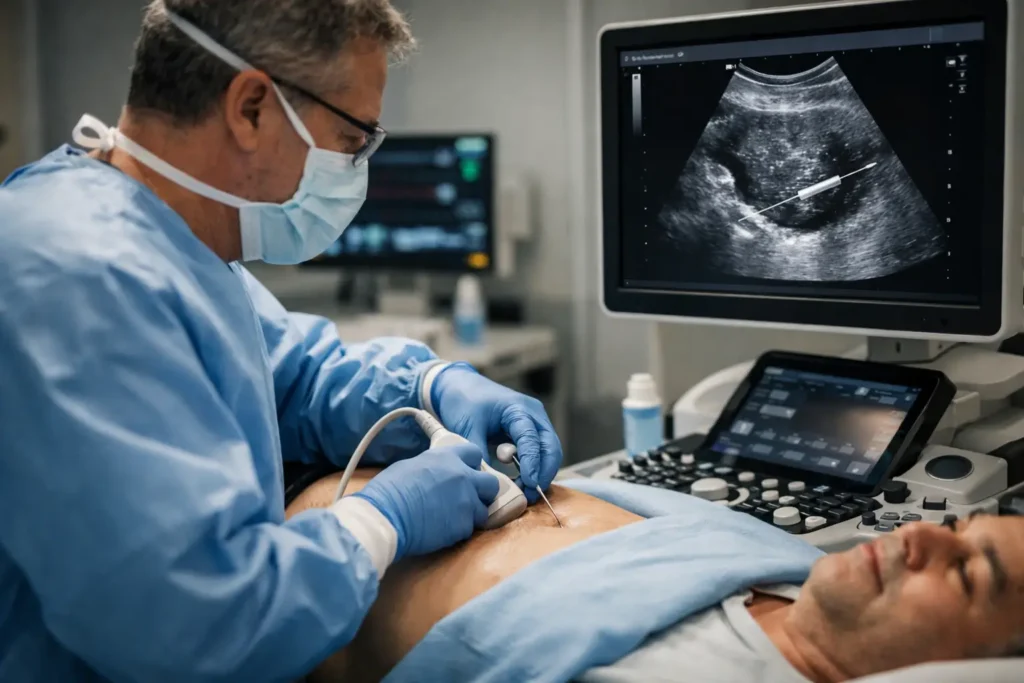
Microwave ablation (MWA) is a cutting-edge, minimally invasive interventional radiology procedure that uses microwave energy to generate intense heat within targeted tumors, destroying cancer cells without surgery. As one of the most advanced tumor ablation technologies available, microwave ablation offers patients — particularly those with liver tumors, lung tumors, kidney tumors, and thyroid nodules — a highly effective treatment option with significantly lower risk, shorter hospital stay, and faster recovery than conventional surgery. At Edge Imaging and Diagnostics, Raghubir Nagar, West Delhi, our interventional radiology team performs microwave ablation using state-of-the-art systems under real-time ultrasound or CT guidance, serving patients from Rajouri Garden, Tagore Garden, Punjabi Bagh, Paschim Vihar, Moti Nagar, Kirti Nagar, and Janakpuri. What Is Microwave Ablation? How Does It Work? Microwave ablation (MWA) works by delivering focused microwave electromagnetic energy (typically at 915 MHz or 2.45 GHz frequencies) through a thin probe (antenna) placed directly into the tumor. The microwave energy causes water molecules in the tumor tissue to vibrate at extremely high speeds, generating friction and intense heat — reaching temperatures of 60–150°C within the ablation zone. At temperatures above 60°C, tumor cells undergo irreversible coagulative necrosis (cell death), creating a precisely controlled ablation zone that destroys the tumor while minimizing damage to surrounding healthy tissue. Compared to its predecessor technology — radiofrequency ablation (RFA) — microwave ablation offers several clinical advantages: larger ablation zones, faster ablation times, higher intratumoral temperatures, better performance in tumors adjacent to blood vessels (which can act as a “heat sink” cooling the ablation zone in RFA), and consistent performance in both dry and wet tissue types. According to evidence reviewed on PubMed/NCBI, MWA demonstrates local tumor control rates of 85–95% for appropriately selected liver tumors up to 5 cm. Microwave Ablation vs. Radiofrequency Ablation (RFA) — Key Differences Feature Microwave Ablation (MWA) Radiofrequency Ablation (RFA) Energy type Microwave electromagnetic energy Radiofrequency electrical current Maximum temperature Up to 150°C 100–105°C (limited by tissue carbonization) Ablation zone size Larger (up to 5–6 cm in a single application) Smaller per application (2–4 cm) Ablation speed Faster (3–10 minutes per tumor) Slower (10–30 minutes per tumor) Heat sink effect Significantly less affected by blood vessels Significantly affected — vessels cool the ablation zone Multiple antennas Can use multiple simultaneously for larger tumors Possible but less common Best for Larger tumors, perivascular tumors, lung tumors, thyroid Smaller tumors in accessible locations Grounding pads Not required (no electrical circuit) Required (large skin grounding pads needed) What Conditions Are Treated with Microwave Ablation? Liver Tumors — Hepatocellular Carcinoma (HCC) and Metastases The liver is the most common target for microwave ablation in oncological practice. MWA is indicated for: Hepatocellular carcinoma (HCC): In patients with HCC tumors ≤5 cm who are not surgical candidates (due to poor liver function, Child-Pugh B/C cirrhosis, multifocal disease, or patient refusal of surgery). MWA achieves complete ablation in over 90% of HCC tumors ≤3 cm, with 5-year survival rates comparable to surgical resection in carefully selected patients Colorectal liver metastases: Patients with limited liver metastases from colorectal cancer who are unresectable or who have refused surgery. MWA combined with systemic chemotherapy significantly improves progression-free survival Liver metastases from other primary cancers (neuroendocrine tumors, breast cancer, renal cell carcinoma) Recurrent liver tumors after prior surgical resection or ablation Lung Tumors Microwave ablation of lung tumors is an effective treatment for early-stage non-small cell lung cancer (NSCLC) in patients who cannot tolerate surgery — particularly elderly patients, those with severe COPD, or patients with compromised pulmonary function where lobectomy would be fatal. MWA can also treat limited pulmonary metastases (from colorectal, renal, or sarcoma primaries). CT-guided lung MWA is performed at Edge Imaging and Diagnostics with immediate post-procedure CT to confirm adequate ablation and check for pneumothorax. Kidney Tumors (Renal Cell Carcinoma) For small renal cell carcinoma (RCC) tumors ≤3–4 cm in patients who are poor surgical candidates (elderly patients, those with solitary kidney, hereditary RCC syndromes with multiple tumors, or bilateral tumors), microwave ablation provides excellent local tumor control with nephron-sparing results. CT or ultrasound-guided renal MWA at our Delhi center is performed under conscious sedation or general anaesthesia. Thyroid Nodules Microwave ablation of thyroid nodules is an emerging, minimally invasive alternative to thyroid surgery for: Benign symptomatic thyroid nodules: Large colloid or adenomatous nodules causing compressive symptoms (dysphagia, hoarseness, neck discomfort) or cosmetic concerns — MWA causes progressive nodule shrinkage (typically 50–80% volume reduction over 6–12 months) without hypothyroidism Autonomously functioning thyroid nodules (toxic adenoma): Causing hyperthyroidism — MWA normalizes thyroid function with high success rates and no radiation Low-risk papillary thyroid microcarcinoma: In carefully selected patients who are not candidates for or refuse surgery — MWA with ultrasound guidance achieves local control in the majority of cases Adrenal Tumors CT-guided microwave ablation of adrenal metastases (from lung, colorectal, or renal primary cancers) and selected primary adrenal tumors is performed at our Delhi center. For pheochromocytoma, careful pre-procedural alpha-blockade is essential to prevent hypertensive crisis during ablation. Bone Tumors (Osteoid Osteoma and Metastatic Bone Disease) CT-guided microwave ablation is highly effective for osteoid osteoma — a benign painful bone tumor — providing complete pain relief in over 95% of patients in a single session. For metastatic bone disease, MWA provides effective local tumor control and significant pain palliation. Who Is a Candidate for Microwave Ablation? Microwave ablation is not suitable for every patient. Careful patient selection is critical for optimal outcomes. General criteria for MWA candidacy include: Liver MWA: Liver tumor(s) ≤5 cm (ideally ≤3 cm for best results), no more than 3 tumors in most cases (some centers treat up to 5), adequate liver function (Child-Pugh A or B), tumor not touching the main bile duct or major hepatic veins Lung MWA: Peripheral lung tumor ≤3 cm, no central airway involvement, adequate contralateral lung function Renal MWA: Renal tumor ≤4 cm, tumor not in the central collecting system Thyroid MWA: Benign or low-risk nodule confirmed by prior FNAC, adequate technical access General requirements: Correctable coagulopathy (INR ≤1.5, platelets ≥50,000), no